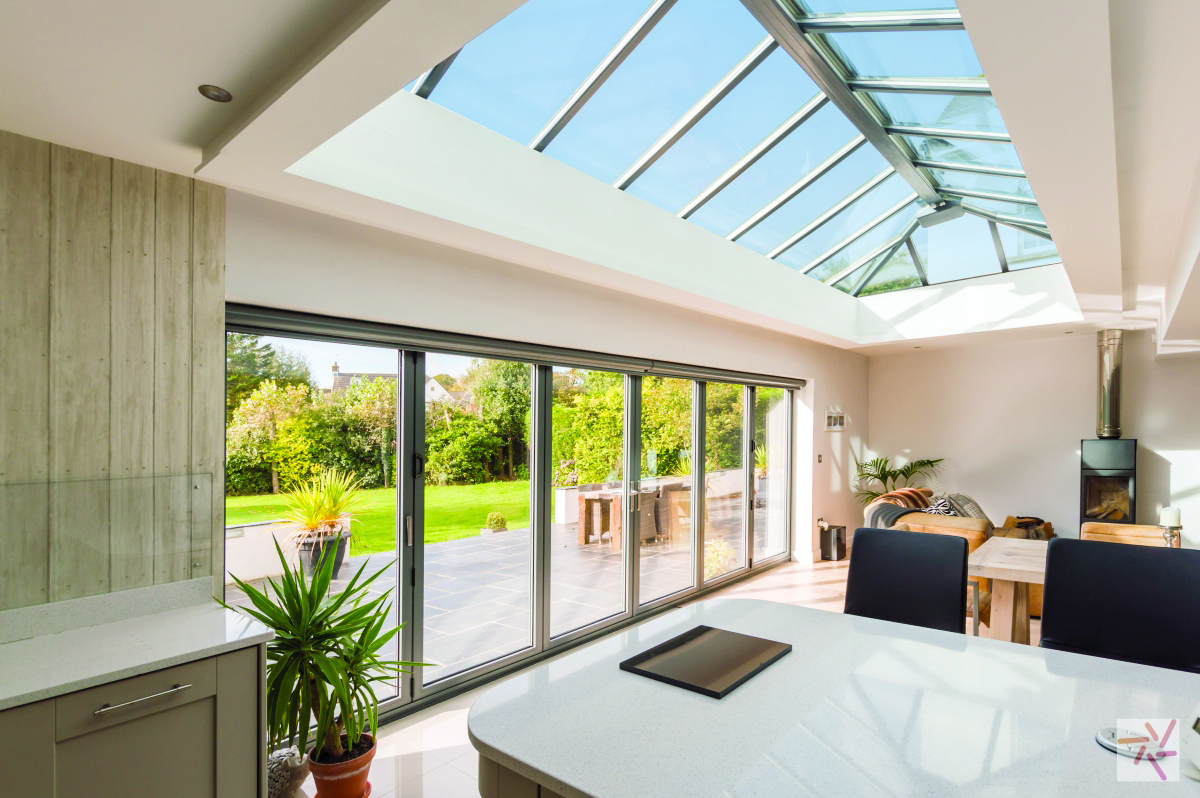
The overheating challenge
By Jenni Young, sector market manager, Saint-Gobain Glass UK.
The risk of overheating in modern homes has become a growing concern. With larger glazing areas now more popular than ever – especially with bi-fold and sliding doors, and glazed extensions – installers and fabricators need to consider not just how much glass is used, but what type.
Too often, glass is still viewed as a single material with one function. Yet advances in glass technology mean that choosing the right specification can transform the performance of a window or door. When it comes to managing overheating in the increasingly hotter summer months we’re now experiencing, the right glass makes a big difference – not just to temperature, but to year-round comfort, energy use and customer satisfaction.
The overheating challenge
Homeowners love natural daylight and outdoor views, which has led to an increase in glazed extensions, open-plan living and floor-to-ceiling windows. While this creates bright and appealing spaces, it can also result in excessive heat gain during the warmer months.
Rooms with large glass areas can quickly become too hot to enjoy, especially in south or west-facing elevations.
The issue is now recognised in Building Regulations. Document O was introduced in England specifically to reduce overheating risks in new homes and extensions. Fabricators and installers have a vital role to play in supporting compliance by ensuring that the correct glass is specified from the outset.
Solar control glass
The good news is that solutions exist, and they are both effective and easy to implement. One of the best ways to prevent overheating is to use modern glass with integrated solar control technology within a coating.
These coatings work by reflecting a portion of the sun’s heat back outside, stopping it from entering the home, while still allowing excellent levels of natural light transmission.
Today’s solar control glass, such as Planitherm One T and Cool-Lite SKN176, help homeowners and occupiers enjoy bright, airy interiors without suffering from uncomfortable summer heat.
They also provide excellent thermal insulation thanks to their low-emissivity coating, which reflects indoor heat back into the room. This dual-action performance means these products keep homes warm in winter and cool in summer – enhancing comfort and reducing energy bills year-round.
The importance of G-values
When selecting glass to prevent overheating, one key performance metric to understand is the G-value. This measures the proportion of solar energy that passes through the glass into the room. The lower the G-value, the less heat is transmitted.
By choosing glass with a lower G-value, such as Cool-Lite SKN 176, which has a G-value of 0.37 and Planitherm One T (0.49 g-value), you can reduce the risk of overheating while maintaining clarity and transparency. It’s an ideal recommendation for south-facing properties or rooms with extensive glazing.
Even more benefits of glass
Modern high-performance glass offers benefits that go well beyond preventing overheating. It improves energy efficiency by lowering heating and cooling costs, enhances security through toughened or laminated options that are harder to break, and reduces noise from outside for a more peaceful indoor environment.
It can even help protect furniture, flooring and soft furnishings by filtering out harmful UV rays that cause fading over time.
Glass typically makes up around 70% of a window unit and even more in modern glazed doors. It’s the key element in defining how a room feels, how energy-efficient it is and how well it performs all year round.
Installers and fabricators who advise on smarter glass choices will stand out in a competitive market.