Fit for the future
When it comes to window and door specification, energy efficiency has become an increasingly important consideration. Window manufacturers are looking to develop frames that can achieve excellent levels of thermal performance without compromising on style or function. Taking this into account, Russell Hand, head of product & technical at Rehau, explores how fabricators and installers can ensure they are selecting windows that meet these demands for customers.
Autumn has just arrived but while temperatures are dropping, power prices are rising. Ofgem recently announced that the average household’s energy bill is increasing by two percent from October 2025.
This undoubtedly affects millions of households who have already seen their bills rise by 37% since the winter of 2020 and 2021.
Given the impact of windows and doors on a home’s overall energy efficiency, the fenestration industry has an important role to play to help mitigate these price hikes. Alongside this, the Future Homes Standard continues to make waves in the market, with new builds required to fit windows with a U-value of 1.2 W/m²K or lower, while retrofitted frames must hit similar levels under Part L of the Building Regulations.
Supply chain pressure
All this leads to a situation where installers and fabricators are under pressure to deliver high-performing windows and doors. Energy-efficiency has gone from a point-of-difference to an absolute fundamental in fenestration, with high-quality solutions expected to be delivered within tight budgets and timelines.
Fenestration professionals are now limited to a smaller pool of high-quality frames which can meet these demands, and it is incumbent on frame manufacturers to help them navigate this new normal. The pressure will increase as net zero emissions deadlines draw closer, with thermal performance standards likely to become more stringent in response.
Announcing Artevo doors
It is with this in mind that Rehau has expanded its leading Artevo window and door system suite with the launch of a residential outward opening single and French door.
Using Rau-Fipro X, the company’s high-strength, glass-fibre reinforced material integrated with recyclable LowE foil technology, the system can achieve U-values as low as 0.81 W/m²K. A thermal insert fitted within the chambers of the Artevo window profiles, the V-shaped, reflective LowE foil replaces traditional foam inserts, reducing heat radiation by up to 5% while also preventing convection.
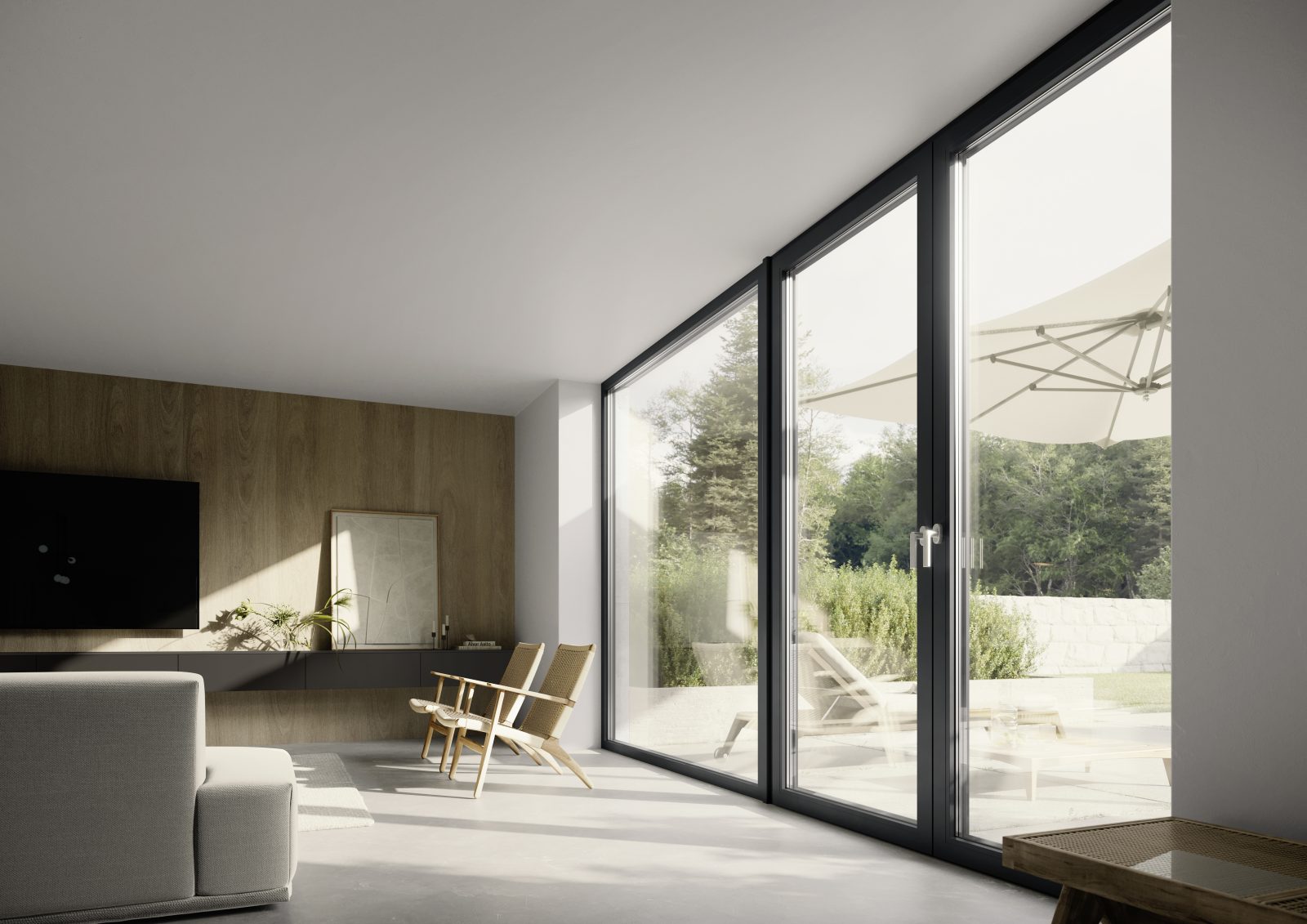
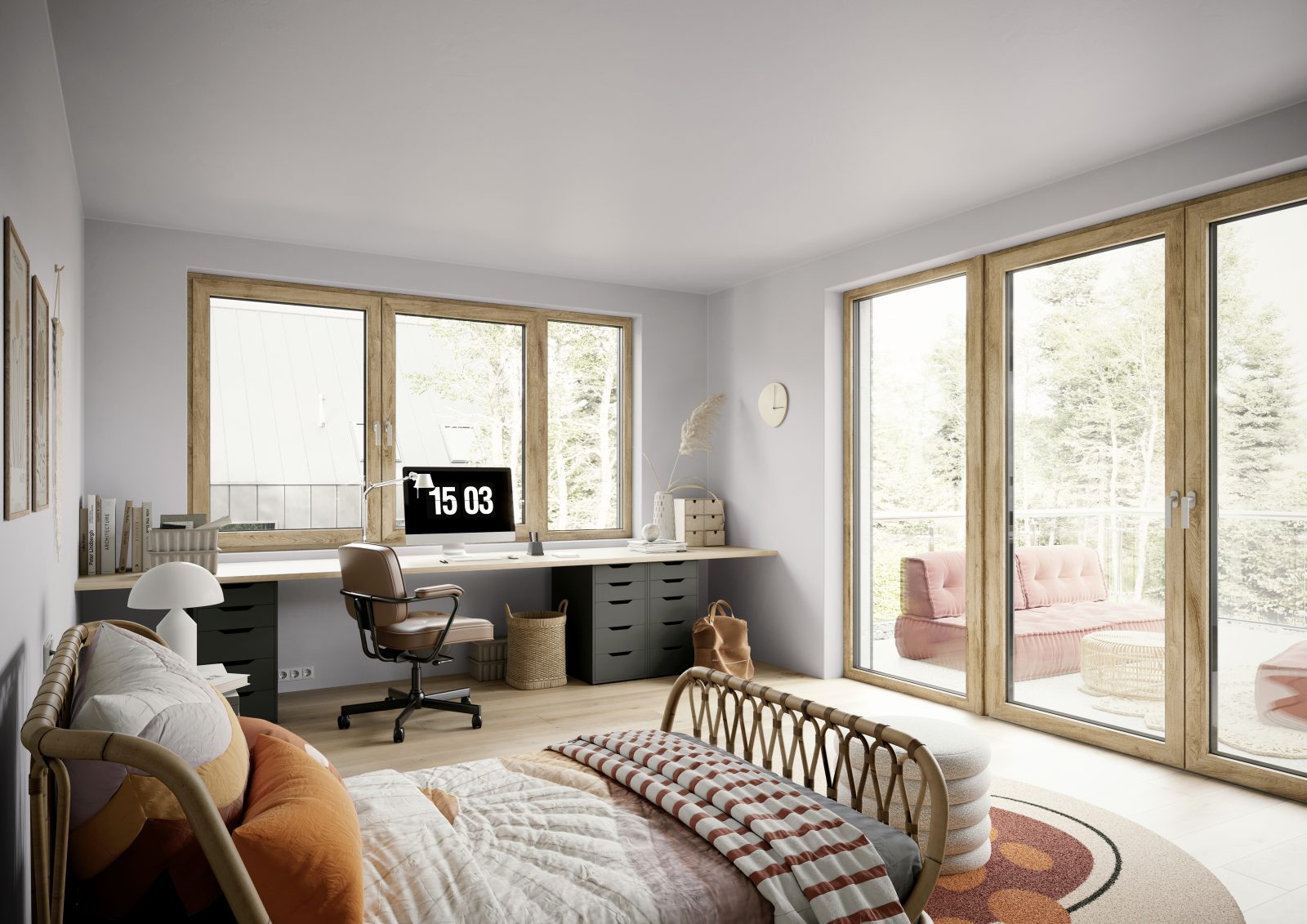
Importantly, the Rau-Fipro X material allows Artevo to be specified in larger window and door sizes. As a result, some products in the Artevo suite can reach floor-to-ceiling heights of up to 2.6m, helping create a highly modern look – especially when combined with aluminium and timber-effect foils.
Combined with triple glazing, Artevo meets the standards required for Passivhaus projects, and can be fitted with sealed units up to 72mm thick when used in the flush-mounted sash. These sashes, alongside Artevo’s slimmed-down 80mm profile sizes, help create a practical and contemporary frame capable of meeting stringent thermal performance requirements.
Specifying for the future
Energy-efficient design is impacting all aspects of a building’s fabric, and windows and doors are no exception. Fabricators and installers need to be able to specify with confidence, knowing the systems they select will meet increasingly strict energy efficiency expectations.
Through developing high-quality window and door system suites, frame manufacturers are well-placed to help installers and fabricators in this. With solutions such as Artevo, installers and fabricators can not only adapt to changing regulatory requirements but thrive in a fast-moving and highly competitive market.