A fair and accurate comparison

CAB highlights how its U-Value Charter is bringing clarity and continuity to aluminium window, door and curtain walling performance data, to the benefit of the whole industry.
From the Future Homes Standard to the cost-of-living crisis and spiralling energy prices, the pressure on the construction sector to deliver energy efficient buildings is continually growing.
Playing an intrinsic role in achieving this, U-values quantify heat transfer through windows, doors and curtain walling, in accordance with Part L of the Building Regulations.
Architects, specifiers, contractors and end-users need confidence that the information they receive is accurate, but historically, comparing U-value performance data between aluminium products has been far from straightforward.
Different manufacturers have applied different methodologies, test sizes and glass configurations when publicly presenting their results, resulting in confusion and misinformation.
Likening performance comparisons of different aluminium products to “comparing apples and pears”, Nigel Headford, chief executive at the Council for Aluminium in Building (CAB), says the need for action was clear.
“U-values play a key role in making the built environment more sustainable, but there was no consistent framework for testing and reporting U-values for aluminium window, door and curtain walling products,” he says.
“Assessing products under different conditions, or with varying specifications, makes comparisons very difficult and potentially misleading. CAB members felt that something needed to be done to make sure that public claims about U-value performance were accurate and fair.”
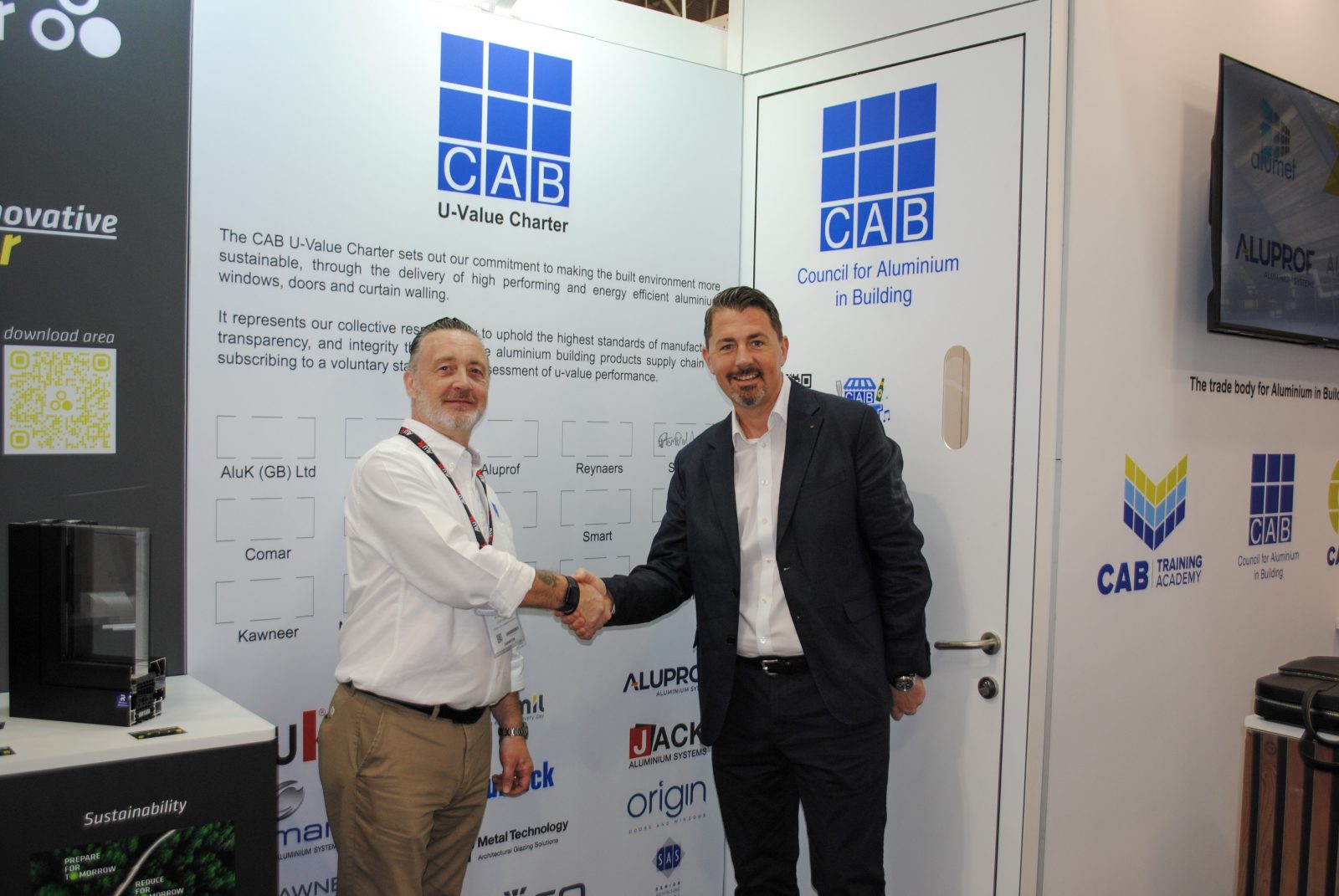
CAB responded with the launch of its U-value Charter. Designed to bring clarity and continuity to aluminium product performance data, the initiative was successfully unveiled at this year’s FIT Show.
With big name players including AluK, Deceuninck Aluminium, Kawneer, Reynaers, Schueco UK and Senior Architectural Systems among the inaugural signatories of the voluntary scheme, it sets a new benchmark for transparency and credibility in the aluminium window and door industry.
Based around an agreed set of parameters, the charter sets out a framework for all signatories to follow when calculating and publishing U-values. Making data easier to understand and product comparison simpler and fairer, the framework includes:
- Standardised evaluation methods based on recognised industry practices.
- Fixed test sizes to eliminate misleading variations between large and small product samples.
- Agreed insulated glass unit (IGU) specifications to ensure that glazing is factored consistently into calculations.
With signatories prevented from ‘cherry-picking’ information or manipulating the facts to paint product data in a better light, published results are directly comparable with those from other charter members.
This means specifiers and contractors can make decisions with greater confidence, based on genuine like-for-like data, rather than a confusing mix of inconsistent claims.
And by committing to a shared methodology, members are not only improving transparency but also raising expectations for the industry as a whole.
“The U-value Charter represents a genuine move towards accountability and standardisation that reflects the aluminium industry’s own recognition of the challenges around performance claims,” says Nigel.
“Those who sign up are truly putting their money where their mouth is.”
Bringing consistency to U-value reporting, CAB’s U-value Charter not only supports compliance but also strengthens the commercial case for aluminium systems in a market where energy performance is now a decisive factor.
As the drive toward net zero picks up speed, initiatives like the charter can play a key role in the delivery of products that not only meet energy efficiency and regulatory requirements but also reinforce trust.
“The provision of clear, consistent and comparable data has never been more relevant as we strive to make the built environment more sustainable,” says Nigel.
“By introducing a voluntary, standardised assessment of U-value performance, we are helping to uphold the highest standards of manufacture, transparency, and integrity throughout the aluminium building products supply chain, for the greater good,” he concludes.