
By Elton Boocock, founder of Thinkivity, providing AI consultancy and training exclusively for the UK glazing industry.
Following on from last month’s focus on documents – highlighting the real cost of small paperwork mistakes in glazing and how AI is starting to catch them before they become expensive – I’d like to offer a different kind of insight. Not errors. Patterns.
The kind that are probably sitting in your data right now, unread.
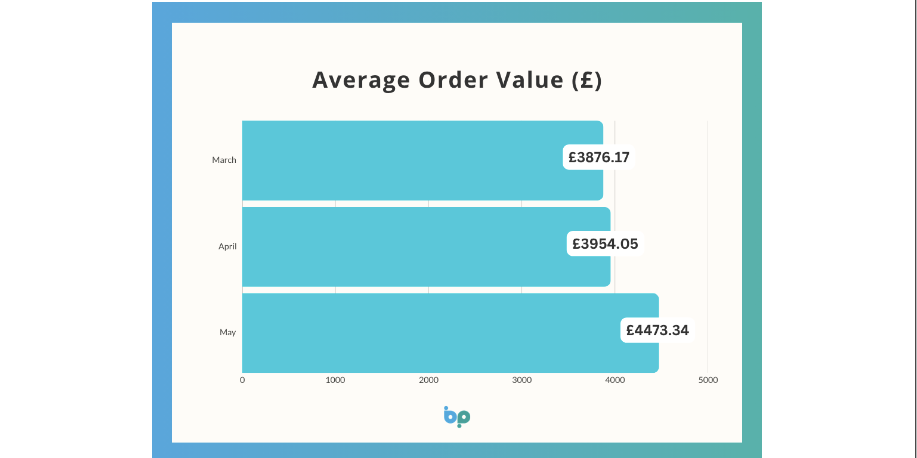
Most glazing businesses have a spreadsheet somewhere. Six months of sales data, enquiry sources, conversion rates, product types, average order values. The kind of export that gets pulled from a quoting system or CRM, saved to a folder, and then mostly left alone because there is never quite enough time to sit down and work through it properly.
Here is what tends to happen when that data gets uploaded into ChatGPT with a simple question: what patterns do you see that I should be paying attention to?
The first thing it typically surfaces is a seasonal pattern. Enquiries in certain product categories are often consistently stronger in February and March, then dip in June. Not dramatically, but consistently enough to matter for planning and staffing decisions.
Most business owners have a rough sense of this. What the data shows is whether the numbers support a change in how you approach marketing spend during those months – instinct confirmed, or corrected, in a few minutes.
The second pattern is usually a conversion gap. One enquiry source is generating volume but converting at roughly half the rate of the others. Average order value from that source is also lower. Time to close is longer. Three signals that tell a clear story when you look at them together but that rarely get examined side by side when you are inside the business every day. That is exactly what AI does well.
The third kind of observation tends to land hardest: a product type that has seen a quiet, steady increase in enquiries, with strong conversion rates, that hasn’t featured in any recent marketing activity. Something customers are already asking for. Something the business is already good at converting. Something no one is actively promoting.
That is what being inside a business every day does. You stop seeing it clearly.
It is worth being honest about what makes this work, because overselling AI does nobody any favours. The analysis is only as useful as the data going in. A clean, consistently labelled export gives you clear patterns.
Merged cells and inconsistent column headers give you noise. The insights it produces still requires a human to interpret and act on. AI spots the pattern. You decide what to do about it. That is the right division of labour.
If you have a similar spreadsheet, try it. Export your last six months of sales, enquiries, or whatever your system holds. Upload it into ChatGPT or Microsoft Copilot in Excel. Ask what patterns it sees, what surprises it, and where the gaps are. Then ask a follow-up: based on this data, what should we be doing differently?
You don’t need to understand pivot tables or statistical significance. You need a dataset and a genuine question.
The glazing industry runs on experience and instinct. Most good decisions are made by people who have seen enough jobs, enough customers, and enough market cycles to know what works.
That experience isn’t replaceable. But AI can sit alongside it — showing you what the numbers say when your instinct is too busy to look.
Put aside 20 minutes. See what your data says.