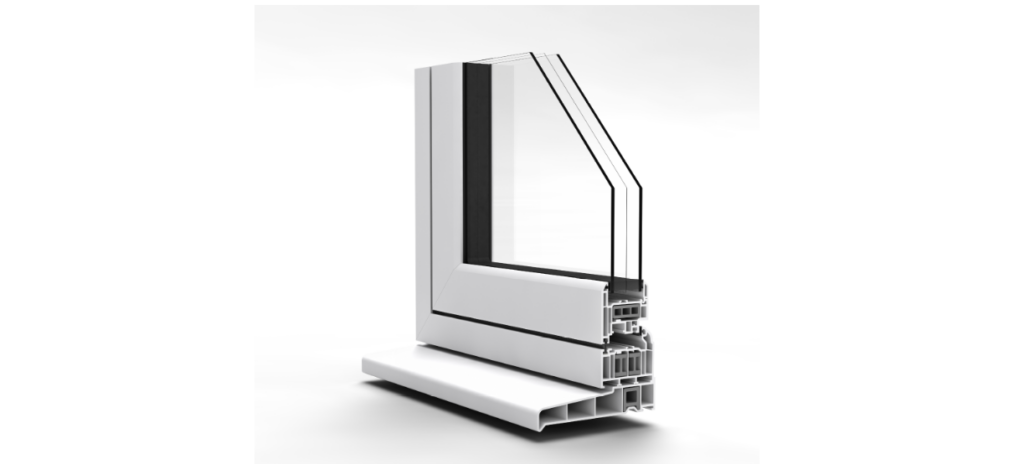

Mike Butterick, marketing director, Saint-Gobain Glass explains why high-performance glazing deserves centre stage.
For many window fabricators and installers, glass is still too often treated as a standard component, selected late in the process and judged largely on price. Yet its impact on thermal performance, comfort and appearance is significant.
The launch of Planitherm Neo by Saint-Gobain Glass offers a timely reminder that glazing deserves a more central role in how windows and doors are specified and sold.
This latest low-emissivity coated glass has been developed for both double and triple-glazed units, providing a single, flexible solution that can be used across a wide range of projects. At a practical level, that means simpler stockholding and easier production planning for sealed unit manufacturers and fabricators.
But the bigger opportunity lies in how products like this can help shift conversations with customers away from cost alone and towards performance and long-term value.
Planitherm Neo delivers strong thermal insulation, achieving a centre-pane U-value of 1.0 W/m²K in a double-glazed unit and as low as 0.5 W/m²K in triple glazing. These figures are important, particularly as Building Regulations continue to tighten and compliance becomes the minimum expectation rather than a differentiator. However, thermal insulation is only part of the story.
The glass also offers optimised solar gain, with a G-value of 54% in double glazing and 42% in triple glazing. In simple terms, this allows useful heat from the sun to enter the building while still limiting heat loss. For homeowners, that can translate into more comfortable living spaces and potentially lower energy bills. For installers, it provides a clear and easy to explain benefit that goes beyond basic compliance.
Light transmission is another key factor that is often overlooked. Planitherm Neo has been designed to maximise the amount of natural daylight entering a room while maintaining excellent insulation.
Brighter interiors are not just an aesthetic advantage. They can also improve wellbeing and reduce the need for artificial lighting. When combined with a more neutral appearance and lower external reflection, the result is glazing that looks as good as it performs, particularly in larger formats such as bifold, glazed extensions and sliding doors.
From a processing perspective, the product has been engineered to be straightforward to work with. It can be used in annealed or toughened form, with the coating retaining its properties after toughening in line with BS EN 12150. This consistency helps ensure that finished units meet the expected performance and visual standards, reducing the risk of variation between batches or applications.
Sustainability is another area where glazing is coming under greater scrutiny. Planitherm Neo incorporates up to 40% recycled glass content, supported by Saint-Gobain’s circular economy programme – Glass Forever. For fabricators and installers, this opens up new conversations with clients who are increasingly aware of embodied carbon and environmental impact, especially in larger residential and mixed-use developments.
Perhaps the most important takeaway is that products like Planitherm Neo can help reposition glazing as a value-added element rather than a commodity. By explaining concepts such as low-E coatings, solar gain and light transmission in clear, simple terms, installers can help customers understand what they are really buying. This can make it easier to justify higher specification options and reduce the focus on upfront cost alone.
In a competitive market where many products meet the same regulatory standards, differentiation is becoming harder to achieve. Glass specification is one area where there is still room to stand out.
With the right approach, fabricators and installers can use innovations like Planitherm Neo not just to improve window performance, but to strengthen their own offering and build more informed, value-driven relationships with their customers.