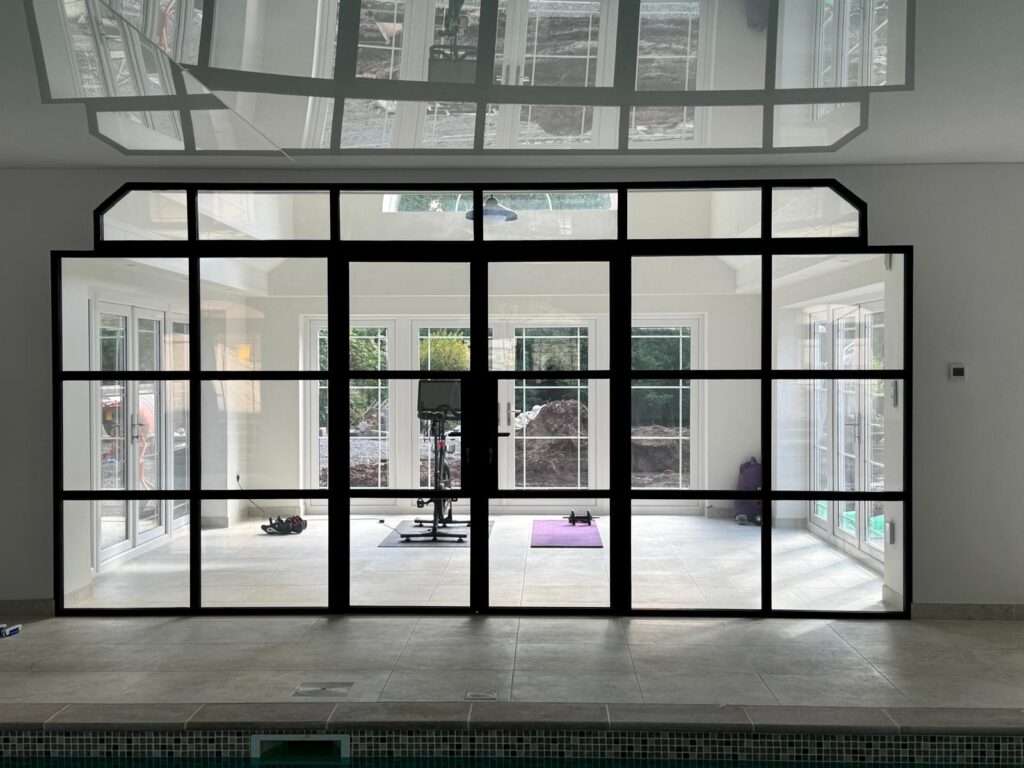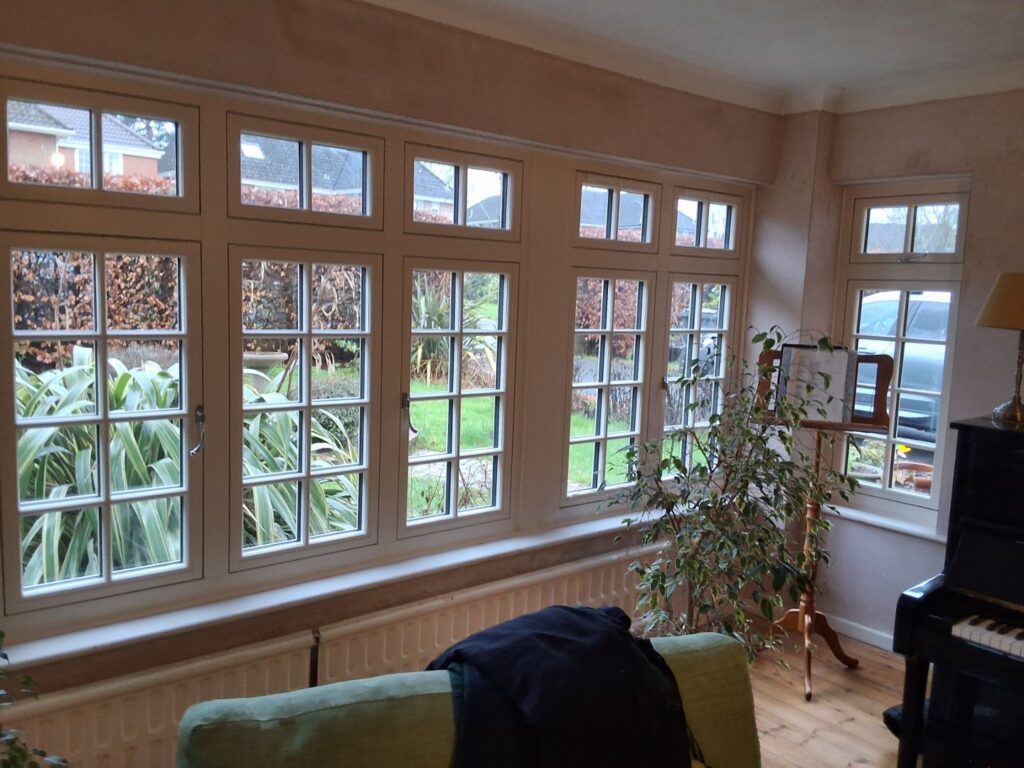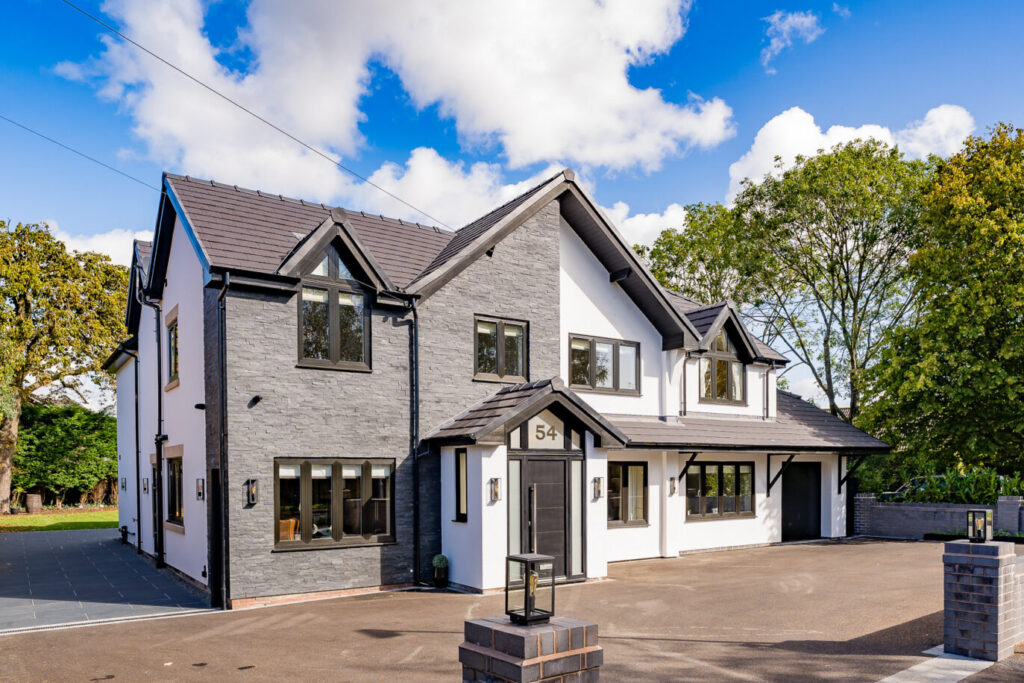

Cornwall Glass has worked as a key supply partner to David Salisbury Commercial, in the replacement of windows and doors in Brighton’s landmark, Grand Hotel.
There is no more iconic image of the English seaside than the Grand Hotel, Brighton. The centrepiece of its promenade, the Grand Hotel, was celebrated in Quadrophenia, the 1979 re-telling of the 1960s running clashes between Mods and Rockers, and more infamously still, it was the setting for the attempted assassination of Margaret Thatcher’s cabinet in 1984.
Not surprising then that the wholesale replacement of the Victorian Grade 2 listed building’s character-defining windows comes with a high degree of scrutiny attached.
“It’s a very high-profile building and there was a huge degree of involvement from planners and building control from the very start,” Joe Marsh, David Salisbury Commercial account manager, said.
“The building is also pretty old, which tends by definition to throw up its own set of problems, including the fact that nothing was uniform, everything was bespoke, and that means you need the right suppliers who will deliver the flexibility and work with you to make things a success.”
David Salisbury Commercial was appointed by main contractor SEH Commercial to supply more than 450 windows and doors to the Grand Hotel. Cornwall Glass was appointed as its IGU supplier.
“To give you a scale and sense of the complexity of the project, we started in October 2016 and finished [in March 2018],” Joe said.
The building was originally completed in 1864, re-built in part after the 1984 bombing, with a multitude of remedial works delivered along the way. “There are no two rooms which are quite the same so each window and door was bespoke,” Joe said. “The other challenge was achieving the right balance from a conservation perspective.
“Work had been completed over the years to windows and doors which wasn’t necessarily sympathetic to the original design, with hardware a particular issue.
“The other thing was that until work actually started it was sometimes difficult to expose the reveal and understand the specific requirements of the building.”
This created a unique set of challenges in window fabrication combining requirement for bespoke and exacting manufacture of individually sized windows, alongside the demand for volume generated by a large scale commercial project.
This also placed a requirement for a high degree of flexibility plus high capacity manufacture on Cornwall Glass, as David Salisbury Commercial’s appointed IGU manufacturer.
“We needed a supply partner that would work closely with us but which manufactured IGUs to the high degree of quality that we needed.” Joe said.
“We were dealing with some very large volumes of glass, while the glazing window was very narrow, so we needed the quality to be there from the outset, in order to guarantee fulfilment.”
Cornwall Glass manufactures IGUs at three locations throughout the south west including St Austell, Highbridge plus a purpose-built IGU facility at Langage, Plymouth.
Going into operation at the beginning of 2016 the state-of-the-art manufacturing hub handles 57 different glass types, ranging from 4mm to 19mm specifications, with capacity to manufacture up to 2,000 units each day.
Cornwall Glass supplied almost 1,000 high-performing double-glazed units to David Salisbury Commercial over the two-year project period. Specified to deliver a U-value of 1.0W/m2K, the argon-filled units were manufactured from 4mm TGH Planitherm One with a 16mm cavity and white warm-edge spacer bar.
As each unit was bespoke, this represented a distinct set of challenges but was further complicated because some of the units also required a horizontal white duplex bar.
“In order to replicate the appearance of some of the windows and doors without compromising performance, the specification included a requirement to introduce an additional spacer bar inside the unit so that when we applied timber detailing outside, it appeared solid and looked like two windows,” Joe said.
“This required the same exacting detail in the manufacture of the units as the windows as a whole – bespoke design and manufacture, and perfect alignment.
“The GGF has quality standards for IGUs but our own go much further, so it was critical that the glass was perfect. Throughout the project we allowed a maximum of five days for glazing before shipment, which left little room for any remakes, so the quality control on the IGU line was very important.
“The glass is the key feature in a window and it defines the end client’s perception of the project so we were looking for exceptional reliability in supply but also flexibility if we needed it.
“In the final phase we required some additional glass units on a short lead time, which we ordered on January 31. These were with us by February 2, which was great.”
Communication played a key part in driving successful delivery, with David Salisbury Commercial maintaining a dialogue with main contractor SEH Commercial and Cornwall Glass. This included a shared schedule of works and detailed drawings.
“It was a two-way process,” Joe said. “Because of the volume we were doing, you can imagine that when you take a delivery you’re dealing with a huge amount of glass that has to be matched to the specific sashes because they’re bespoke. The differences between units might only be a few millimetres but that can still have a significant impact on the product.
“Everything had to be listed and everything had to be accurately labelled so we could match every product, and that required a high degree of care and attention to detail from Cornwall Glass.
“That’s what we’re looking for from a supplier: the ability to form that working relationship, to get it right and deliver the high standards that we’re looking for and, if required, to deliver the flexibility to put things right on the rare occasions in this case that we didn’t get it right first time around.”