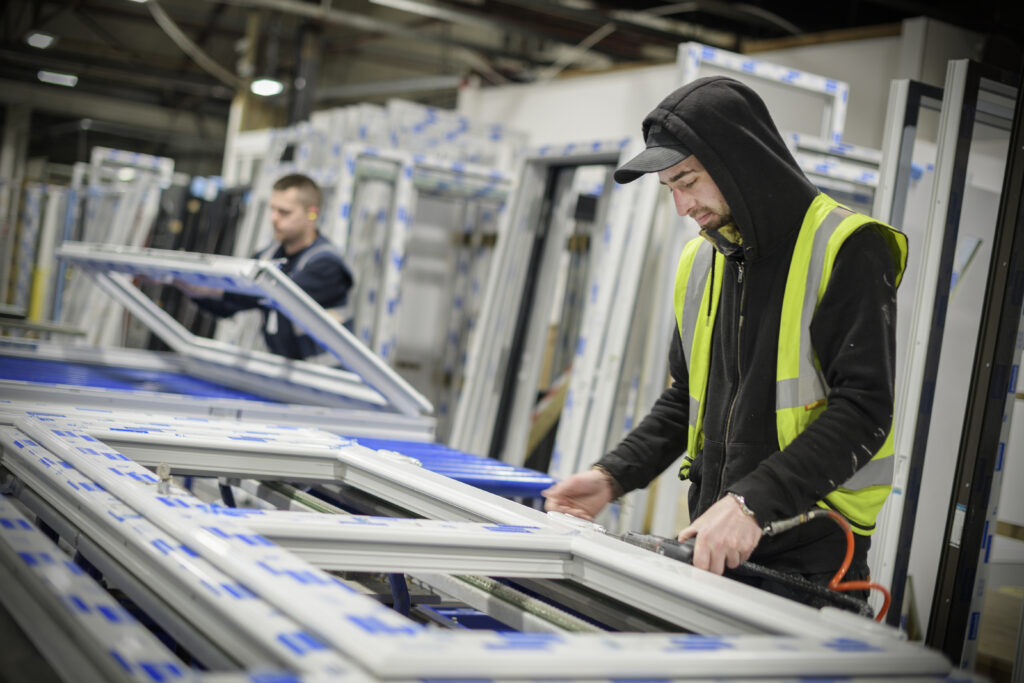

Rehau’s recycling facility, PVCR, has committed to increasing its processing capacity by 60% by 2024, with the introduction of a pre-shredding operation being a key first step.
The process, introduced in March this year, aims to increase the facility’s processing capacity from 15,000 tonnes per annum to 24,000 tonnes by speeding up the shredding stage. Energy consumption of the overall operation has been reduced by 20% while allowing work to be kept within a shorter timeframe, improving sustainability.
As two rollers break down recycled frames into 150mm size pieces, metal components are stripped from the profiles to then be removed with magnets before the polymer is shredded. By breaking down the frames initially all shredding operations have been restricted to daylight hours reducing noise pollution caused by the facility.
Ceri Davies, general manager at PVCR, said: “We’ve been using the pre-shredding operation for eight months now and we’ve seen a significant increase in our processing capacity as well as the amount of material we can store on site.
“The quantity of recycled PVC that we have been able to send over to the Blaenau plant is phenomenal which of course positively impacts the amount of co-extruded products they are able to manufacture and get out to customers.
“Our energy consumption is also down 20% which, during the current energy crisis has enabled us to work more efficiently. We’re keen to continue this energy savings – for instance, we have reduced the size of the motors we use within our machinery, as part of our ongoing drive to improve overall productivity.”
Polymer recoverability is a key priority in ensuring PVCR meets its 2024 target. Currently, approximately 20% of the facility’s current 15,000 tonne output is impure coloured plastic, also known as ‘jazz’, which is of insufficient quality to be used in Rehau polymer.
As such, Rehau has implemented processes to ensure these recovered materials can be used in other aspects of the frame, including reinforcements and supports, in order to further reduce waste and improve the circular economy of materials.
With the 2024 target in mind, Ceri said, “Our targets to reduce product wastage are ambitious and require a holistic approach across all PVCR processes if we are to achieve them. Better separation is key to this – currently, 85% of all materials we recover from frames is repurposed into other products, and by further improving this process, we can increase this figure.
“Doing so will be vital to achieving our aim of processing 24,000 tonnes of material by 2024 and reducing material going to landfill.”