
The latest CPA forecast points to another difficult year for new build, with housing starts and completions both set to fall. But while lower demand presents obvious challenges, price volatility poses an even greater threat to installer profitability.
The latest Construction Products Association forecast makes for difficult reading. Private housing output is forecast to fall by 7% in 2026, with housing starts down 10% and completions falling by 6%, as higher borrowing costs, weaker buyer confidence and ongoing planning challenges continue to weigh on the market.
The CPA rather unreassuringly describing it as a “perfect storm” for housebuilders, with recovery not expected until 2027 at the earliest.
But while lower demand presents obvious challenges, the bigger threat facing installers and commercial contractors may be something else entirely – price volatility.
“I’m not dismissing the obvious concern that there are fewer houses being built and therefore fewer windows and doors required,” says Mike Parczuk, CEO of Sternfenster.
“That’s clearly a challenge for the industry, and we’re not pretending otherwise.
“The thing is to an extent you can manage that out of your business, you can cut overheads, streamline processes and adjust your growth strategies.
“Volatility on price is much more damaging, because you’re making a commitment, often against very long lead times. When raw material prices are changing almost by the minute – and normally upwards – that can leave you exposed.”
Even if the current ceasefire and peace deal holds, the conflict in the Middle East will continue to create uncertainty across global energy and logistics markets for months to come.
Higher oil prices, shipping disruption and increased manufacturing costs are feeding through the supply chain, creating an environment where material costs can change significantly during the lifespan of a project.
“Historically, fixed-price agreements worked because costs were relatively stable,” Mike continues.
“Today, that’s no longer the case. We’ve seen surcharges and price increases applied across multiple product categories in a relatively short period of time.
“We’re absorbing as many of those costs as we can, in common with every fabricator we have to pass some of those price increases on to our customers. If installers don’t adjust their price increases accordingly, they’re going to be exposed.”
Mike argues winning business at any cost is more damaging than not wining it at all, and he urged installers to reflect the realities of their supply chain in their tenders.
“Winning work is one thing. Delivering it profitably is something else entirely,” he says. “I’m not suggesting building in stacks of extra margin ‘just in case’ your overheads suddenly rise.
“The entire supply chain should, however, be adopting an agile approach to pricing, which accurately reflects your costs as a business.
“We’ve been encouraging customers to shorten quotation validity periods, review pricing throughout longer projects and have open conversations with contractors and developers from the outset,” continues Mike.
“Nobody likes surprises, but equally nobody benefits when suppliers absorb unsustainable increases and put their own businesses under pressure.”
This segways into another key point for Mike – reliability – which he argues becomes increasingly important in a volatile market.
As programmes tighten and margins come under pressure, he points out that delays in the supply of windows and doors can have consequences across multiple trades and stages of construction.
This is one reason why Sternfenster continues to invest heavily in manufacturing, logistics and customer support.
Earlier this year, the Lincoln-based fabricator recorded its highest ever Complete On Time In Full performance, including transport performance of 99.58%, glass production performance of 98.03% and customer service performance of 99.57%.
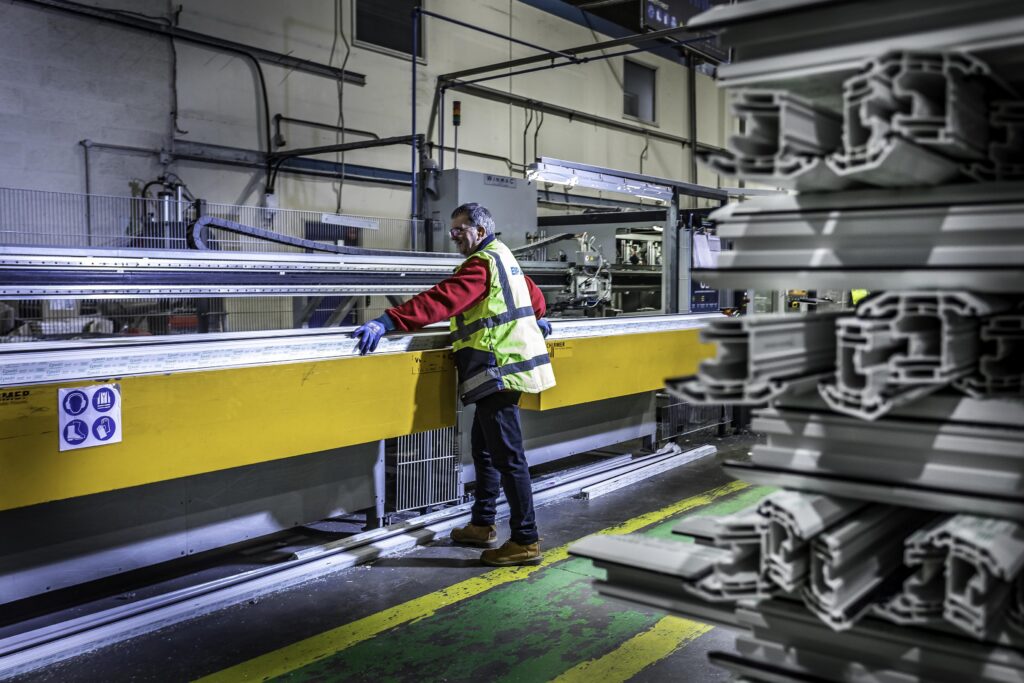
This has been founded on a raft of recent investments include a £1.2m Forel automated glass line, a £1.4m PVC welding and cleaning line, a £400,000 sustainability programme centred on solar energy generation, and approximately £400,000 in IT development projects designed to improve efficiency and customer service.
“Reliability isn’t something you suddenly decide to do when conditions become difficult,” Mike continues.
“It’s the result of years of investment in people, systems and infrastructure. When projects are under pressure, installers need confidence that their supplier will deliver what they say they’re going to deliver.
“The investments that we have made have driven better quality and better service, ultimately making us a more flexible supply partner for our customers.
“We’ve been able to invest because we’re profitable,” says Mike. “We need to stop thinking of profitability as a dirty word. Profitability allows you to invest, to run your business sustainability and to deliver better quality and service to customers.
“’Buying work’ in the commercial space or rigidly holding your prices when they mean you lose money runs against that entirely.”