
As IGU manufacturers contend with tighter tolerances, reduced margins and growing production pressures, consistency has never been more critical. Thermoseal Group is responding with targeted automation that ensures precision and delivers dependable, high-performance components for its customers.
At Thermoseal Group, investment in intelligent production systems is focused squarely on delivering measurable benefits for customers – ensuring accuracy, repeatability and reliability at every stage of manufacture.
But rather than viewing automation as a replacement for people, Thermoseal Group says that it has taken a pragmatic, production-led approach.
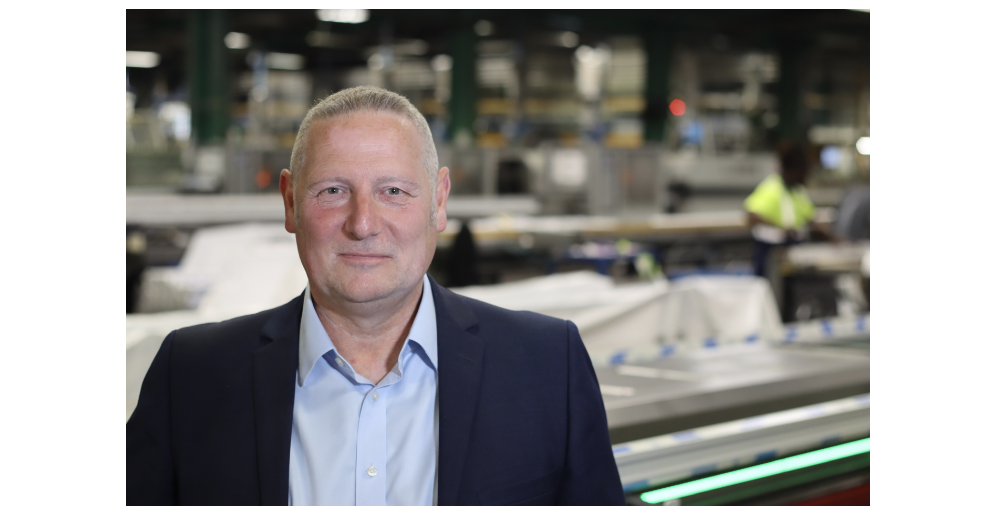
“Even the most experienced operators are still human,” explains Mark Hickox, sales director at Thermoseal Group. “Manual processes inevitably introduce variation over time. Our focus has been on using automation to remove that variability, so our customers get the same high-quality components, unit after unit.”
One such example is seen during the manufacture of its Thermoflex flexible foamed spacer system, where automation is used to tightly control tolerances throughout the extrusion process. Every millimetre of material is continuously measured using a 360-degree monitoring system that checks both airspace and material thickness in real time.
This live monitoring allows Thermoseal Group to account precisely for material behaviour further down the line. While the spacer initially measures larger, it is engineered to shrink by a known amount during curing, ensuring it reaches the exact airspace required once baked.
“If the product moves outside tolerance, the system alarms and stops the line,” Mark explains. “The operator removes that section before production continues, so only in-tolerance material goes forward for baking and lamination.”
For customers, this level of control significantly reduces variability.
“Accurate spacer dimensions improve sealing integrity, gas retention and ultimately thermal performance,” Mark adds. “It takes a lot of risk out of the IGU manufacturing process.”
Automation also plays an important role beyond core production. A new banding machine, developed in-house by Thermoseal Group’s engineering team, aligns, collates and bands Thermobar ready for export, all in the correct orientation for bending machines commonly used in continental Europe.
This means components arrive with customers in optimal condition, ready for immediate use – reducing rework, rejects and downtime on their own lines.
Crucially, Thermoseal Group’s automated systems are also supported by intelligent monitoring. Production data across Thermobar, Thermoflex and component manufacturing is tracked in real time, allowing anomalies to be identified early and addressed before they impact output. Rather than reacting to problems after the fact, teams can intervene proactively.
“This kind of visibility gives us – and our customers – confidence,” Mark explains. “It means better consistency between batches and far fewer surprises once components are in use.”
By automating repeatable, precision-critical tasks, Thermoseal has also been able to redeploy skilled operatives into higher-value roles. Instead of constant manual handling, teams are focused on quality control, process optimisation and technical support – areas where experience and judgement add the most value.
“That human oversight is still essential,” continues Mark. “Automation gives us the consistency, but it’s our people who ensure everything is working exactly as it should. The combination is what really benefits customers.”
The impact is tangible. Reduced error rates mean less waste, fewer component-related failures and more predictable performance in the finished unit. This improved accuracy supports compliance with tightening u-value requirements and helps protect manufacturers from costly remedial work further down the line.
Just as importantly, automation also supports reliability of supply. Streamlined, efficient production helps Thermoseal Group maintain consistent lead times, even as demand patterns shift or volumes increase.
“We know our customers are under pressure to deliver more, with less margin for error,” Mark concludes. “Our job is to make their lives easier – supplying components they can trust, produced with precision, consistency and care. Automation is a big part of how we do that.”