
By Danny Williams, managing director, Pioneer Trading.
Because I like to deal very much in the real world and my own gut instincts, I take economic forecasts with a pinch of salt, even if I am drawn to the headline statistics to allow myself a bit of a giggle.
But currently I find myself on the verge of sympathy for these hapless yet surely earnest people because being an economic forecaster is a bit like being asked to predict the weather six months out and then being held accountable when someone gets rained on at a barbecue. You do your best, you crunch the numbers, and then the world goes and does something completely mental.
Take the Glenigan Construction Industry Forecast, published back in November last year. They were predicting a modest recovery – yes, a -6% dip in 2025, but then an 8% bounce back in 2026 followed by a more robust 13% surge in 2027. Lower borrowing costs, improving household incomes, a government with its foot on the accelerator on housebuilding. The mood music, cautious as it was, pointed firmly upward.
Then, on the 28th of February this year, the United States – well my old pal Donald really – and Israel launched a series of strikes against Iran, killed the Supreme Leader and, as a side effect, closed the Strait of Hormuz. A spanner in the works of the Glenigan Construction Industry Forecast, to put it mildly.
Oil trading over $100 a barrel; but also aluminium hitting a four-year high following Iranian strikes on smelters in Qatar and Bahrain. Steel, copper and cement all seeing rapid inflation. And PVC – up more than 30% due to petrochemical supply chain disruption. Glass factories, brick kilns, cement plants, all of them hammered by energy costs almost overnight.
UK inflation, which had been heading back towards the 2% target, jumped to 3.3% and is now expected to potentially hit 4%. The interest rate cuts that every housebuilder and home improver had been banking on for late 2026? Gone. The Bank of England isn’t cutting anything.
And Glenigan’s own figures for the three months to March 2026? Residential construction starts down 30% on 2025 figures. Private housing down 34% year on year. Civils nosediving 34%. Infrastructure down 37%. That’s not a hiccup. That’s a completely different report entirely.
To be fair to Glenigan, their own man said it best back in November: “As with any forecasts, it’s difficult to foresee unpredicted and spontaneous political and economic issues until they suddenly land, often completely changing the situation.” You can say that again, Allan.
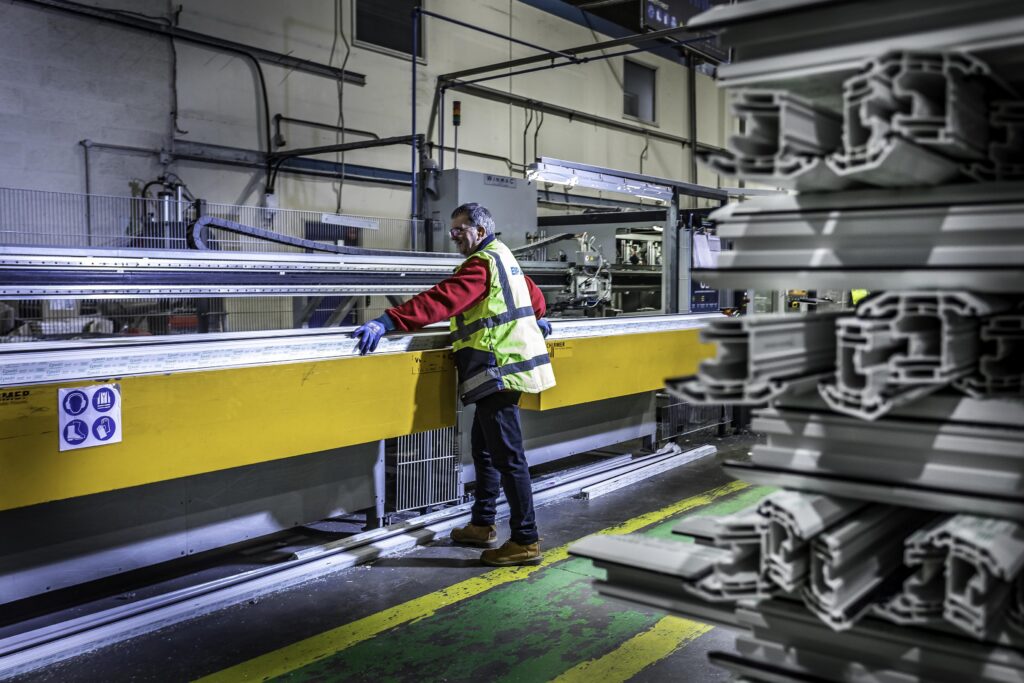
For those of us in the window and door industry, the consequences are entirely predictable. Housebuilding feeds our order books.
Home improvement follows consumer confidence and cheap mortgages. Both are now on the floor. The jobs that were supposed to materialise on the back of Starmer’s 1.5 million homes pledge are not appearing anytime soon – and the refurbishment market, squeezed between rising costs and stalled household spending, isn’t much of a refuge either.
Who would be an economic forecaster? More to the point, who would be a glazing company trying to plan for 2027 on the basis of a report written before the world caught fire?
The only forecast I’d bet money on right now is this: whatever anyone told you last autumn, tear it up. We’re in new territory, and the map hasn’t been drawn yet.
And another thing…
My sympathies towards forecasters are further honed by my own attempts to make sense of things through this column. By the time you read this the World of Westminster will have tilted further towards the left as a number of opportunists line up to stab their leader in the back.
At the time of writing those sharpening their blades include: Wes Streeting; Andy Burnham; Angela Rayner; and Ed Miliband. All of whom – including Starmer, have the same thing in common: not one of them has ever had a proper job, what I would define as working in a business that actually produces wealth.
Not one of them has ever built anything. Not a company, not a client list, not even a decent sales pipeline. They have moved, their entire careers, from one publicly funded position to the next, perfectly insulated from the kind of commercial reality that the rest of us deal with before we’ve even had our first coffee of the morning.
And I fear the worst; irrespective of who is PM at the end of this period, this is what the leadership of this country will look like, one way or another…
Angela Rayner – care worker, union rep, MP. In that order; Wes Streeting – Cambridge, the NUS, charities, council, Parliament. Andy Burnham – Cambridge, researcher for a Labour MP, special adviser, Parliament, Mayor. And Ed Miliband – Oxford, LSE, Harvard, Gordon Brown’s researcher, Parliament.
Between them, these four together with Sir Starmer, have accumulated zero years of private sector business experience. Zero invoices raised. Zero VAT returns filed. Zero sleepless nights over a wage bill that didn’t quite add up.
And yet one of them will likely be running this country before the next General Election.
Welcome to the Socialist Republic of Britain.