
Diamon-Fusion’s Guillermo Seta explains the benefits of the nano-chemical process that is engineered to permanently enhance how glass behaves in real world applications.
In today’s architectural and glazing landscape, expectations for glass have never been higher. Beyond transparency and aesthetics, stakeholders now demand durability, efficiency, and long-term performance with minimal maintenance. As specifications evolve, surface protection is no longer a secondary consideration; it is a defining factor.
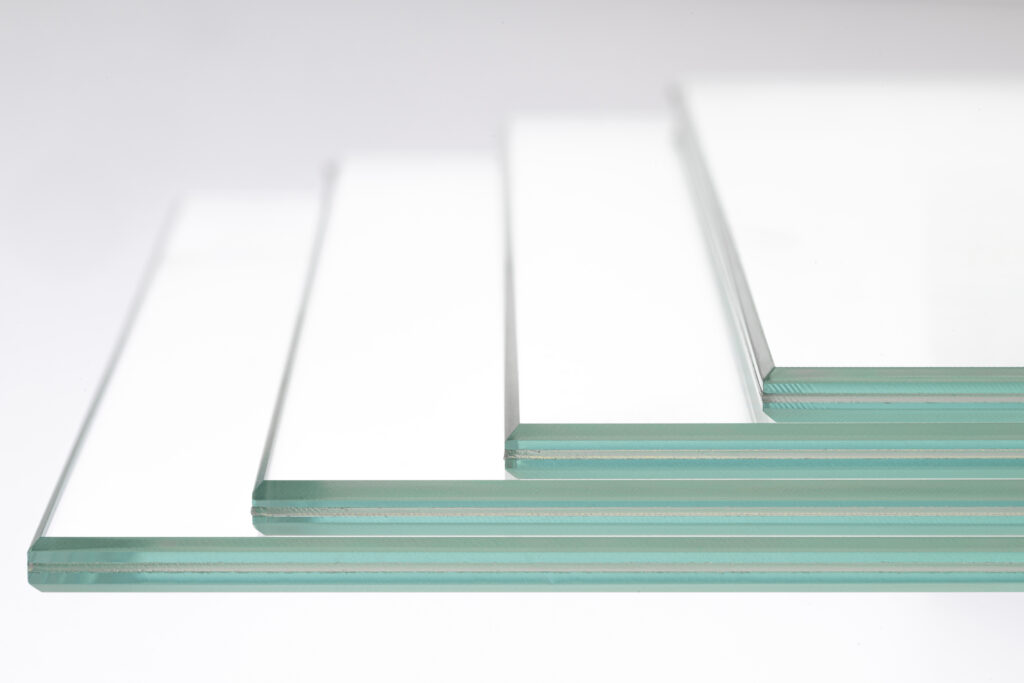
Diamon-Fusion represents a significant advancement, elevating glass from a passive material to a high-performance, molecularly engineered substrate. Unlike conventional coatings that merely sit atop the surface, this patented nano-chemical process permanently transforms the glass itself.
Upon application, an instant reaction occurs. There is no curing time, no handling delay, no dependence on environmental conditions.
DFI’s nano chemistry forms a ‘web-like’ nanostructure within the silica via covalent bonds, effectively altering the substrate’s molecular composition. The result is a uniform, permanent transformation rather than a temporary layer prone to degradation.
A critical distinction in modern glazing is the difference between untreated ‘naked glass’ and engineered surfaces. In its untreated state, glass is highly vulnerable at a microscopic level, exposed to environmental staining, mineral bonding, and surface degradation over time. Diamon-Fusion eliminates this vulnerability by creating a permanent, molecular-level protective barrier, fundamentally changing how the surface behaves in real-world conditions.
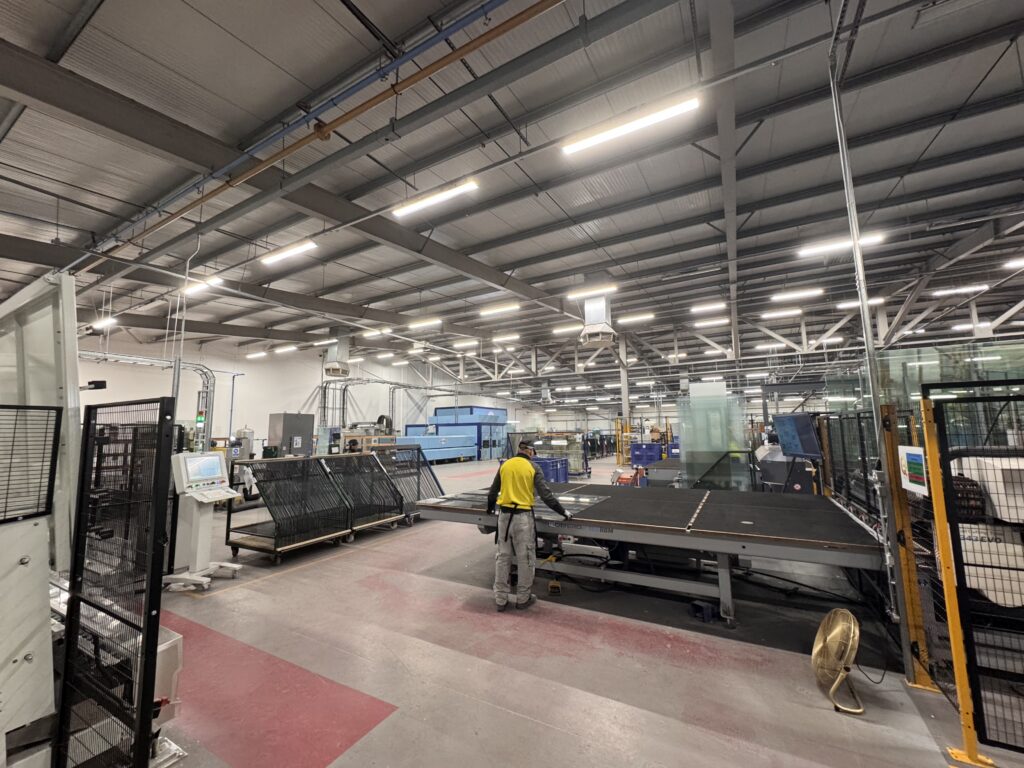
DFI’s advanced chemistry is delivered via its patented FuseCube technology – an automated, highly efficient application system designed for modern production environments. It enables consistent, high-speed treatment with zero emissions, supporting both scalability and sustainability goals. Diamon-Fusion also offers full flexibility in application, with manual options available both in-house and in the field.
Looking ahead, DFI continues to expand its manufacturing capabilities with its upcoming in-line vertical coating machine –adding new heights in performance and production flow efficiencies and further advancing automated glass treatment at scale.
A distinguishing characteristic of Diamon-Fusion is its proven performance in demanding environments, including applications by the U.S. Army and U.S. Navy, underscoring its military-grade durability. By reinforcing the surface at the microscopic level, the treatment significantly improves scratch and impact resistance, two of the most common causes of glass degradation.
It’s this added strength that enhances longevity, reduces replacement frequency, and protects installations in both high-traffic and high-exposure environments.
Equally important is the functional performance derived from Diamon-Fusion’s surface properties. The treated glass exhibits a high contact angle and a low sliding angle, resulting in low wettability. Water beads up tightly and easily slide off, minimising maintenance needs, which is especially important for façades, balustrades, and shower enclosures, where clarity must be maintained over time.
Beyond durability and ease of maintenance, Diamon-Fusion enhances both visual and thermal performance. The treatment increases surface brilliance by up to 20%, delivering a clearer, more vibrant appearance. It withstands temperatures up to 600°F (315°C) and higher with DFI’s latest formulations, making it suitable for demanding environments requiring thermal stability.
These benefits do not come at the expense of visual integrity. Diamon-Fusion maintains 100% optical clarity, ensuring the glass remains free from haze, distortion, or discoloration. The nano-layer’s branched, cross-linked, and capped structure creates a stable network that resists environmental stress, unlike traditional coatings that may chip, crack, or discolor over time.
From a sustainability perspective, the advantages are equally compelling. Reduced cleaning frequency lowers water and chemical usage, while extended glass life minimises waste and replacement cycles. In an era where environmental responsibility is closely tied to material selection, Diamon-Fusion offers a practical pathway to improved lifecycle performance.
For architects, specifiers, and glazing professionals across the UK, Diamon-Fusion delivers a compelling combination of science, efficiency, and durability – redefining glass as a resilient, low-maintenance, and high-performing component of the built environment.
Based in Rugby, Advanced Processing Machinery, directed by Richard Gerrard, distributes DFI’s technology in the UK.