

With the entrance door market bursting at the seams, Hurst says there is still plenty of room for manufacturers who invest and innovate – and the installers who choose to work with them.
The UK entrance door market is more crowded than ever, with numerous suppliers jostling for position, growing product ranges and stiff competition for homeowners’ attention.
As consumers continue to invest in doors that deliver security, energy efficiency and improved kerb appeal, demand remains steady, with differentiation key to growth.
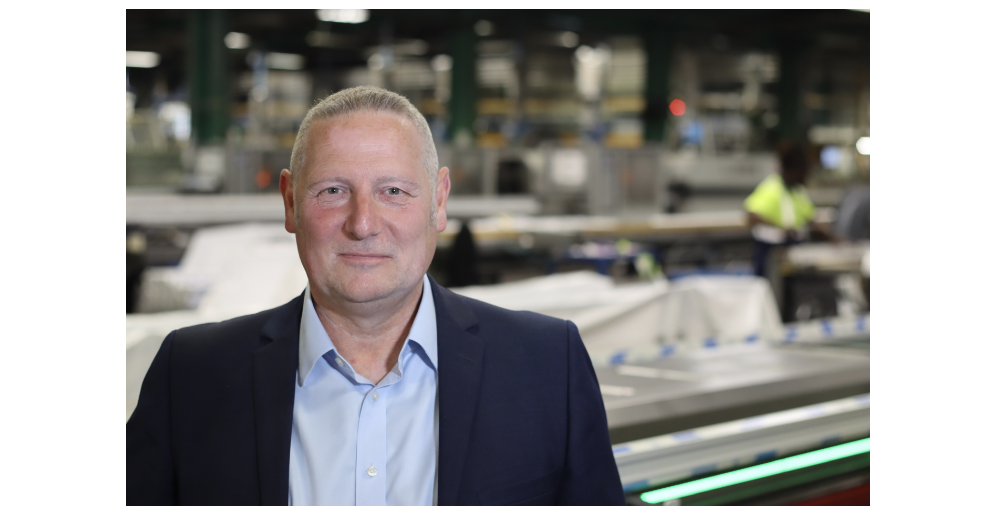
“It’s a very busy, mature marketplace, but the demand is still there,” says Mark Atkinson, sales director at Hurst. “The issue now is that consumers are able to be a lot more selective, so things like innovation, service support and strong brand positioning are instrumental in turning their heads.”
For installers, simply offering a standard range is no longer enough.
“Many products look quite similar on paper, so installers need to offer something extra,” explains Mark. “That might be a premium option, a unique design, a supplier they know they can rely on – or ideally, all of the above.”
Manufacturers, in turn, have a growing responsibility to provide these things and help their customers stand out. At Hurst, that starts with a clear focus on innovation and ongoing operational improvement.
Continuing to invest in new machinery, equipment and production processes, Hurst is able to increase its capacity while maintaining the consistency that installers depend on.
Alongside this, the company has expanded its product portfolio to reflect market trends and provide installers with more tools to compete and win business.
As homeowners increasingly look for higher-specification entrance door options, recent innovations include both the S-Class solid timber core composite door and the Securicore PVC-U panel, providing fabricators and installers with opportunities to upsell and access new markets.
Securicore gives fabricators the option of manufacturing a PAS24-accredited PVC-U panel door at a highly competitive price point, while the S-Class provides installers with even more choice when it comes to style, specification, and customer budget. In a sector where competition often drives prices down, this product differentiation is key to helping protect margins.
“Every customer is different, so having the right mix of products allows fabricators and installers to tailor their offer and compete more effectively,” says Mark.
Specialising in what it does best, Hurst’s strategy is to evolve its core composite and panel product ranges to smoothly integrate into its existing manufacturing processes, rather than diversifying into brand new product areas.
“This policy helps us to maintain consistency for installers managing customer expectations and project timelines,” explains Mark. “It keeps us focused on what we do best, as opposed to a scattergun approach, which could negatively affect the quality of our composite and panel offering.”
While the competition remains strong in an entrance door market close to saturation, for businesses that choose to work with the right product manufacturer, there are still plenty of opportunities.
“The market might be crowded, but that doesn’t detract from the positive outlook we have at Hurst,” concludes Mark.
“It’s a challenging environment, but there’s still plenty of room for focused businesses that invest, innovate and support their customers – and that’s what keeps us growing.”