

The 2025 Annual Colour Trends Survey, from software specialist Tommy Trinder has underlined the growing importance of colour; only 62% of windows are white.
Analysis of 584,000 PVC-U casements quoted by around 700 of the country’s leading installation firms in 2025, suggests that whilst smooth white continues to dominate, installers are being called upon to offer an increasingly diverse colour palette.
Grey is the go-to
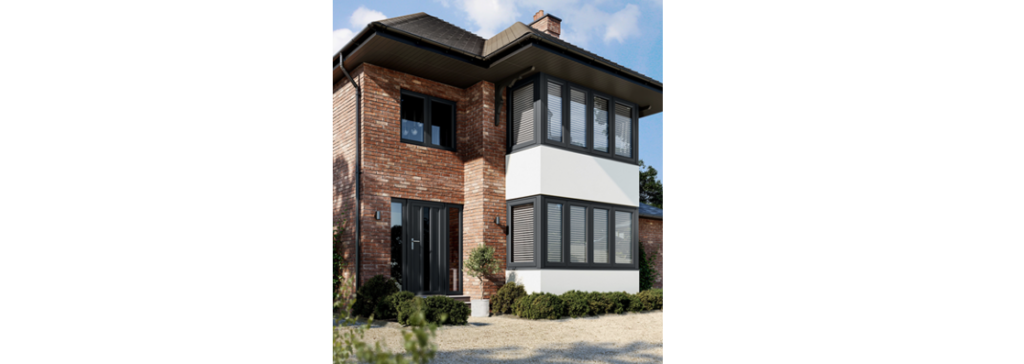
Grey, in its many variations, continues to be the most popular alternative, according to Tommy Trinder’s data. Anthracite remains the standout non-white finish at 10%, reaffirming its position as the modern classic. However, agate grey (4%) and a further 4% spread across other grey tones show that demand is now distributed across multiple shades rather than centred on a single option.
Together, greys account for close to one in five PVC-U windows quoted – a clear signal that contemporary, muted tones are now firmly embedded in homeowner preferences, says Tommy Trinder’s CEO, Chris Brunsdon.
“Homeowners are no longer just choosing ‘grey’,” explained Chris. “They’re choosing which grey works best for their home – and that nuance is reshaping the market.”
A broader palette
Beyond grey, the data paints a picture of a market that is increasingly confident with foil finishes. White grain (4%) continues to appeal to homeowners seeking texture without straying too far from tradition, whilst black has edged up to 3%, reflecting its growing use in contemporary and design-led projects.
Cream (2%) retains a foothold, and Chartwell Green (1%) continues to perform steadily as a heritage-inspired option.
Elsewhere, a long tail of niche colours – from subtle greens to bolder statements – each account for small volumes individually but collectively underline just how far the industry has moved beyond a limited standard range.
Woodgrains are no longer the default alternative they once were, but they have not disappeared. Rosewood (4%) remains the clear leader, while oak finishes (Golden, Amaranth, English, Irish, Natural, Coriander, Cinnamon etc.) continue to tick upwards in modest but consistent volumes. The absence of once-popular options such as Mahogany reinforces how tastes have evolved towards more natural finishes.
Chris adds that such a wide range of colours now in play, installers face both an opportunity and a challenge, arguing that offering choice can be a powerful differentiator, but only if customers can clearly visualise the end result.
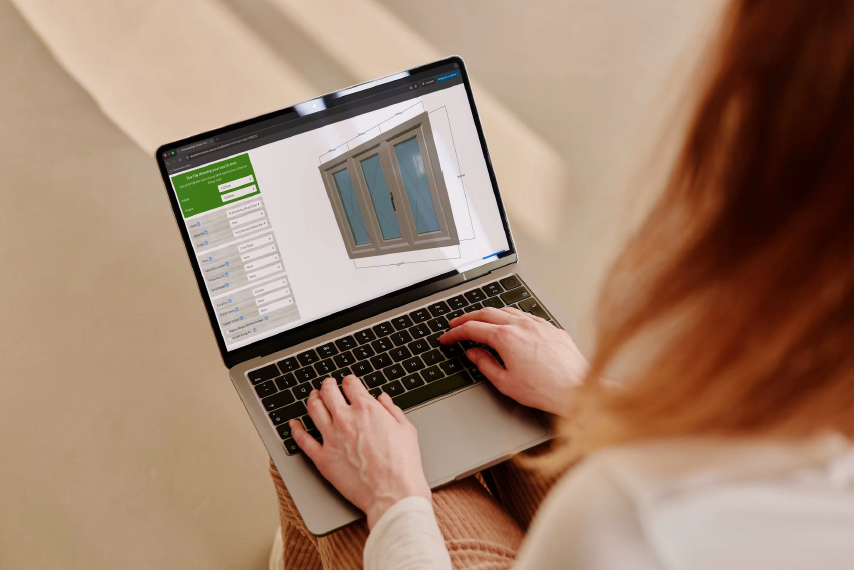
“Installers tell us that being able to show exactly how a window will look – in the chosen colour, in elevation and on the actual house – has become an essential part of the sales process,” he said. “Photorealistic visualisation removes uncertainty, builds confidence and helps avoid costly misunderstandings later in the process.”
Looking ahead to 2026
So what does the data suggest for the year ahead?
“My money is on continued diversification rather than a single breakout colour,” said Chris. “We’ll see more variations on off-whites and creams, continued strength across multiple greys, and a steady rise in confident accent colours as homeowners become less risk averse.
“What’s clear is that colour is no longer an afterthought. It remains a central part of the sales conversation and a key way for installers to add value, stand out, and sell with confidence.”