

Aperture Works is helping installers reclaim time, profit and control with cutting edge software solutions. These include the ability to streamline ‘take offs’, the time consuming process of scaling window, door and roof drawings from architects plans and for simplifying the ‘faff’ of creating CIS Invoices. We talk to Aperture’s Paul Edwards, to find out more.
The UK glazing industry continues to navigate challenging trading conditions. Consumer confidence remains subdued, operating costs are stubbornly high, and while there are signs of stability, only modest growth is forecast for 2026.
For installers and fabricators alike, the reality is clear: winning work is harder, margins are tighter, and efficiency has never been more important.
In this environment, forward-thinking businesses are increasingly looking inward – not just at how they generate leads or price jobs, but at how they operate day to day. Manual processes, duplication of effort and outdated working methods are quietly draining time, money and energy from businesses that can least afford it.
The good news is that a growing range of digital tools now exists to address exactly these pain points.
Purpose-built software packages are designed to remove friction from everyday tasks, reduce errors, and free installers to focus on what really matters: delivering work, serving customers and growing profitably. Among the companies leading this charge is Aperture Works, which has developed cutting edge solutions in the form its Take-Off PDF and CIS Invoice applications.
Designed around how installers actually work
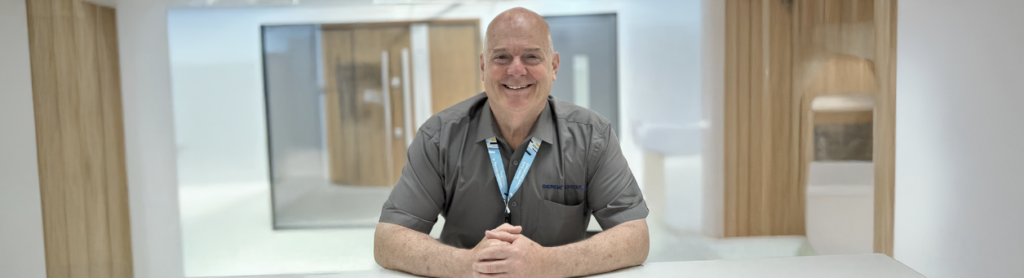
Aperture Works is headed up by Paul Edwards. His starting point was simple: too much industry software doesn’t reflect how installers and surveyors really operate on the ground.
“I’ve worked with most of the major window software platforms available in the UK,” explains Paul. “Fabrication systems, designers, CRMs – and the consistent issue is that none of them fully reflect real-world workflows. Installers end up creating workarounds, duplicating effort and fixing problems later.
“Take-Off PDF addresses the very start of that chain. If the enquiry and measurement stage is right, everything that follows becomes simpler, faster and more accurate.”
That philosophy underpins both of Aperture Works’ core applications.
Eliminating hours of manual take-off work
A take-off is the process of measuring windows, doors and roof lanterns from architectural drawings, scaling them correctly and preparing schedules for quotations and manufacturers. For many installers, it remains an old-fashioned, manual task – printing drawings, measuring with rulers and manually inputting dimensions into spreadsheets.
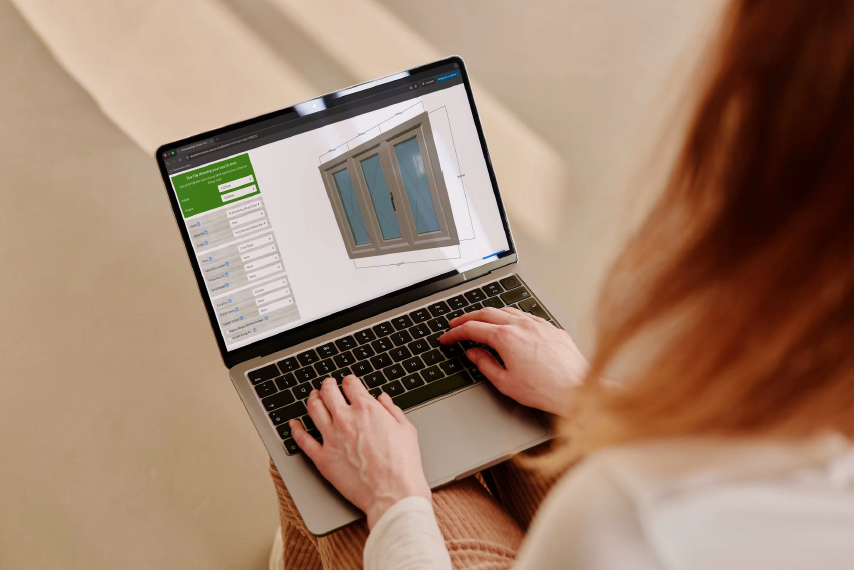
Take-Off PDF replaces that process entirely. The application allows users to upload architects’ drawings, digitally scale and measure windows, doors, vertical sliders and roof lanterns, and automatically generate accurate dimensions.
With just a few clicks, measurements can be exported directly into an Excel spreadsheet. A premium feature goes further, creating detailed schedules broken down by individual product type, ready to send to suppliers or fabricators.
“People are often surprised by how much time they spend on take-offs,” says Paul. “It might be an hour here or two hours there, but over the course of a month it adds up to days of work. Take-Off PDF removes that burden.”
Crucially, the software is not limited to new-build or large commercial projects.
“Any property that is altered, extended or refurbished will be drawn at some stage,” Paul explains. “If drawings exist, Take-Off PDF can be used, regardless of the age or style of the property.”
Real-world impact for installers
The benefits are already being felt by companies such as Chigwell Window Centre, which previously relied on manual scaling of architects’ drawings when pricing commercial work.
Before adopting Take-Off PDF, preparing quotes for larger projects was slow and labour-intensive, with the ever-present risk of human error. Since switching, the process has been streamlined significantly, producing clear, easy-to-read schedules with a high degree of accuracy.
For Chigwell, the result has been measured not in minutes, but in days – and in some cases weeks – saved compared to the old manual approach.
Built on modern foundations
One of the key differentiators of Take-Off PDF is that it has been developed from the ground up, rather than built on legacy code.
“Much of the industry’s software is based on very old foundations, which limits innovation,” Paul says. “We started with a clean slate, using modern development techniques throughout.”
That includes the deployment of Aperture Works’ own trained AI language models, designed to automate take-offs while keeping the user firmly in control. The more the platform is used, the more accurate and powerful it becomes.
Looking ahead, Paul hints at further developments that could be transformative.
“The long-term vision is that you’ll be able to take a photo of a house on your phone, virtually upgrade the windows and doors to excite the homeowner, and have the system automatically scale and send dimensions to a fabricator for quotation. That technology is coming, and it will genuinely change how the industry works.”
Removing stress from CIS invoicing
Alongside Take-Off PDF, Aperture Works has also developed CIS Invoice – a solution aimed squarely at subcontractors working on commercial projects.

CIS invoices are notoriously time-consuming and easy to get wrong. They must clearly separate labour and materials, calculate tax deductions correctly and show gross, deducted and net amounts, all while remaining compliant with HMRC rules.
The CIS Invoice app automates the entire process. Users input job details, and the system calculates deductions automatically, whether the subcontractor is registered or unregistered. Receipts for fuel and expenses can be attached digitally, invoices can be sent instantly via email or WhatsApp, and payments can be chased more efficiently.
“It removes stress,” says Paul. “It’s fully compliant, intuitive and designed so installers can get paid faster and move on to the next job.”
Breaking habits to stay competitive
Despite the availability of tools like these, Paul acknowledges that habits can be hard to break.
“People are creatures of habit,” he says. “Some installers rely on techniques they trust, even when they’re inaccurate or inefficient. But in today’s market, that’s costing time and money.”
With margins under pressure and competition fierce, the risk of standing still is growing. Those who embrace modern, purpose-built digital tools are better placed to operate efficiently, reduce errors and protect profitability.
“Take-Off PDF and CIS Invoice are about giving time back to installers,” Paul concludes. “Time they can spend winning work, delivering quality and growing their business. That’s where the real value lies.”
In a market where every hour counts, working smarter is no longer optional – it’s essential.