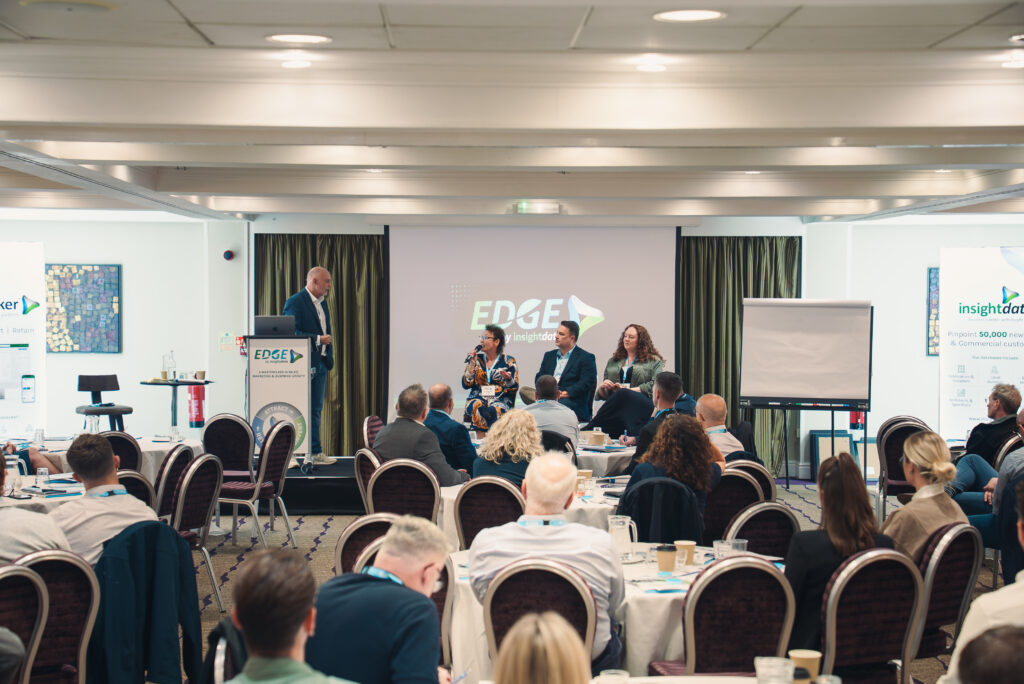

Vast PR director, Kate Ashley-Norman, clarifies why brand visibility matters most when markets slow down.
The UK fenestration sector has never been short of strong products. We manufacture some of the most energy-efficient windows, secure doors and technically advanced glazing solutions in the world.
We invest heavily in machinery, software, compliance, training and operational efficiencies. Yet when markets become challenging and budgets come under pressure, one area often finds itself under the microscope before any other: marketing.
On the face of it, the logic seems sound.
If sales are slowing and margins are under pressure, reducing expenditure on advertising, PR, social media, exhibitions or brand activity can appear to be an easy win. After all, marketing is difficult to touch, difficult to measure and often difficult to directly attribute to an individual sale.
But therein lies the problem.
Many companies view marketing as a tap that can simply be turned on and off when required. In reality, effective marketing behaves more like momentum. Once lost, it can take significant time, effort and investment to rebuild.
The uncomfortable truth is that most buying decisions are made long before a customer asks for a quote.
Whether that customer is a homeowner, installer, builder, developer or trade partner, they are constantly absorbing information from the market around them. They notice who is exhibiting, who appears in the trade press, who is active on LinkedIn, who is producing useful content and who seems to be thriving despite difficult conditions.
It’s rarely one platform, but a multiple number of channels and media amplifying a consistent message using a tone of voice that is recognisable and relatable.
The prospect may not act immediately, but they remember.
That memory becomes familiarity – and familiarity becomes trust.
And trust often becomes the deciding factor when a purchasing decision finally arrives. Price is important. Of course it is. But not necessarily the cheapest – otherwise we wouldn’t all be running around with the latest iPhone.
Confidence in what you are offering is what places you ahead of your competition – even if they are coming in significantly below your own price.
This is particularly relevant in the current market. While demand has softened in many sectors, competition for every enquiry has intensified. Customers have more choice than ever before, and products have become increasingly comparable.
Most homeowners cannot explain the difference between a reinforcement specification, a glazing spacer bar or a particular hardware component. What they do remember is the company they have heard of, the brand they have seen before, or the name that repeatedly appears when they start their research.
The same principle applies throughout the supply chain.
Fabricators remember the machinery supplier that consistently shares expertise. Installers remember the systems company that remains visible and engaged. Trade customers remember the businesses that continue to communicate when others have gone quiet.
So, it’s safe to say that while visibility creates reassurance, silence creates uncertainty.
Of course, every business needs to manage costs responsibly. This is not an argument for reckless spending or marketing for the sake of marketing. Every pound invested should have a purpose and support broader commercial objectives.
However, there is a significant difference between refining a marketing strategy and abandoning it altogether.
History repeatedly shows that companies which maintain their presence during difficult periods often emerge in a stronger position when markets recover. While competitors retreat, they continue building awareness, strengthening relationships and reinforcing trust. They are effectively investing in future market share while others focus solely on short-term savings.
Perhaps the biggest challenge is that the return on brand-building activity is rarely immediate. A trade press article published today may influence a buying decision six months from now. A LinkedIn post might be seen by a future customer who is not currently in the market. An exhibition conversation may eventually develop into a relationship years later.
This can make marketing feel frustratingly intangible. Yet the absence of marketing is often far easier to measure.
Ask yourself a simple question: what happens when nobody knows who you are?
Being memorable is crucial, because while there is undoubtedly a cost to building awareness, there is an even greater cost to becoming invisible. Being forgotten may be the most expensive decision a company can make.