
By Arne De Ceapóg, specification manager at Pilkington UK.

Once associated with fussy 1970s bathrooms and granny’s front door, textured glass is having a renaissance with homeowners who value its ability to soften light, provide privacy and add subtle pattern.
Used well, it brings a tactile quality and a sense of craftsmanship that flat, clear panes simply can’t match, and Texture by Pilkington has 20 designs to suit any space.
Here are five ways that your customers can use textured glass to balance practical benefits with aesthetic appeal.
Front doors and side panels: A front door has to feel secure, let in light and give visitors a positive first impression of the home. Textured glass in the door itself, or in side panels, can achieve all three.
It’s a brilliant privacy solution, blurring the view into the hallway while still allowing daylight to flood in, dispensing with heavy net curtains or blinds that darken the space.
Customers can choose from a range of designs that echo the era of their house, like simple geometric patterns like Digital for 1930s homes, or delicately patterned Mayflower panes to complement a Victorian property.
Bathroom windows: Bathrooms are where textured glass can really prove its worth, protecting privacy without bathing the room in gloom.
Textured glass diffuses daylight so homeowners can forgo fussy window dressings, while adding interest to an otherwise minimal space.
Where a bathroom window overlooks a neighbour or a street, recommend a medium-to-heavy obscurity pattern, such as Arctic or Charcoal Sticks.
Shower screens: Homeowners are increasingly choosing textured glass for shower screens and doors, as it’s far more forgiving of limescale and water marks than a completely clear sheet, so you don’t feel obliged to squeegee after every shower.
Reeded glass adds vertical lines, which elongate the room, maintaining a sense of openness while allowing a little modesty.
Paired with slender black or chrome frames it gives a contemporary look, while warm brass fittings create the feel of a curated design feature.
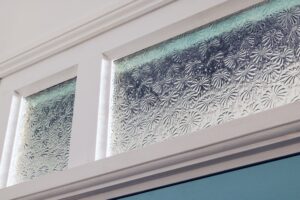
Interior partitions: Open-plan living remains popular, but many are rediscovering the joy of partially enclosed rooms, like a home office lightly screened off from a sitting room, or a utility area separated from a kitchen.
A glazed partition with patterned glass lets light travel through while blurring visual clutter, where solid walls would make rooms feel cramped and dark.
Aesthetically, it’s a chance to introduce rhythm and texture. Linear designs like Warwick and Reeded have an almost gallery-like quality, while softer, hammered patterns like Minster and Contora feel more relaxed and domestic.
Kitchen backsplashes: Used as a backsplash, textured glass creates a wipe-clean, heat-resistant surface that feels lighter and more delicate than a slab of stone or a sheet of stainless steel.
Behind a hob or sink, marbled designs like Cassini hide splashes and water marks, reflecting light back into the room and enhancing under-cabinet lighting beautifully.
For a more architectural look, customers can back-paint the glass in a soft colour, so they get both tone and pattern.
Handled thoughtfully, Pilkington textured glass is a versatile and practical solution for customers who want to soften light, protect their privacy and lend pattern and movement to everyday spaces.