
By Neil Parton, managing director, Elumatec UK.
I’m guessing that kids no longer say they want to be train drivers or astronauts when they grow up. I imagine many dream of playing in the Premier League or being an influencer with millions of followers.
Some, no doubt, are ready to work hard, pursuing that footballing dream, learning to code so they can develop the next smash-hit video game, or striving for the professional qualifications that will underpin their stellar legal career.
Good luck to them all – but where are the youngsters with a passion for making things? Where are the kids who build models or spend hours stripping down an old engine to see how it works?
I may be sounding a bit nostalgic, ready to insist that every kid is given a Meccano set and that games consoles should be banned. But bear with me, because if we don’t generate an interest in manufacturing amongst our young people, we will never solve the skills shortage.
Unfortunately, in the UK there’s a negative perception about careers in manufacturing. We talk about someone as ‘working in a factory’ rather than pointing out that they are precision machining components for aerospace applications. Contrast that with Germany where securing an apprenticeship is celebrated and those with manufacturing skills are respected and valued.
Decades ago, the decline of the UK manufacturing industry wasn’t seen by some as a problem. It was said that we would be better off leaving the dirty and dangerous work of producing things to other nations and that our service industries would plug the gap employment-wise.
That view ignored a fundamental part of what it is to be human. We get pleasure from making things. It’s satisfying to hone and perfect our skills. If you want to know why there’s such an interest in handicrafts right now, think about all those millions with desk-based jobs whose creativity is seeking an outlet.
Addressing the image problem
I sincerely hope that you all started protesting when I said that manufacturing was a dirty and dangerous business. Those of us working in the sector know that’s a long way from the truth these days. Manufacturing has, quite literally, cleaned up its act.
Workers are protected from excessive heat, noise, vibration and noxious chemicals. Machinery is designed along ergonomic principles and PPE is a statutory requirement in many settings. Workplace injuries sadly still occur, but they are no longer tolerated as an occupational hazard.
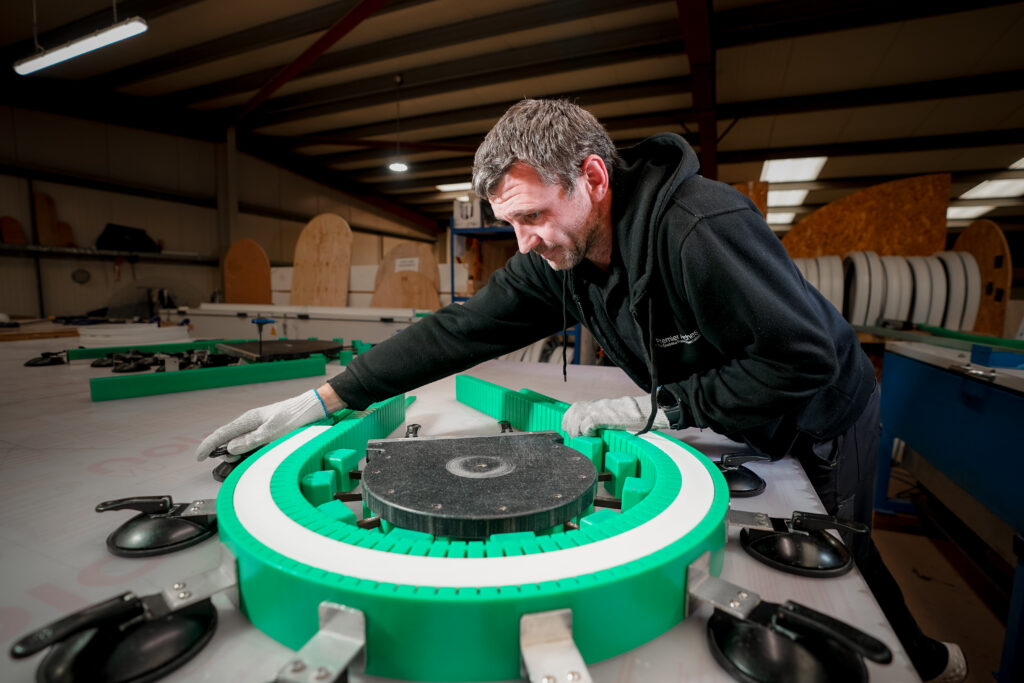
Forget the image of the dark, grease-coated sweatshop, most factories are bright, clean and well-maintained – and many house high-tech equipment including robotics and advanced digital solutions.
They are exciting, intriguing and testament to the skill and vision of countless engineers. Roles vary but often they require real mastery of a crucial skill – or the ability to problem solve, plan, negotiate, mentor others, lead a team or secure investment. Manufacturing isn’t one job. It’s a model of an entire functioning economy, which needs a diverse range of talents and aptitudes.
We should be proud of our sector. We should champion it and promote its role as a key part of wealth generation. What’s more, we should be grabbing the attention of all those young people before they are seduced by the service sector and its ultimately disappointing prospects.
Stability and support
I believe that UK manufacturing has the potential to be world-class. Indeed, much of it already is, but we can achieve more, and for that, we need stability. That’s key if we are to encourage talent into the sector. It’s also essential to support the investment needed, whether that’s in machinery, in technology or to address wider issues in infrastructure or supply chains.
A stable climate gives us the chance to focus on issues beyond the immediate. We can look at sustainability. We can explore new methods of manufacturing. We can form partnerships and collaborate. We can embrace the benefits of digitisation and the potential of AI.
We can, in short, rediscover the excitement of manufacturing.
We just have to believe. We have to sell the experience to the next generation, support the apprenticeships and recognise the commitment of those undertaking them. We need to boost our productivity, show off our brilliance, celebrate our current successes and make plans that will deliver long-term.
It’s going to be fabulous. Who’s with me?