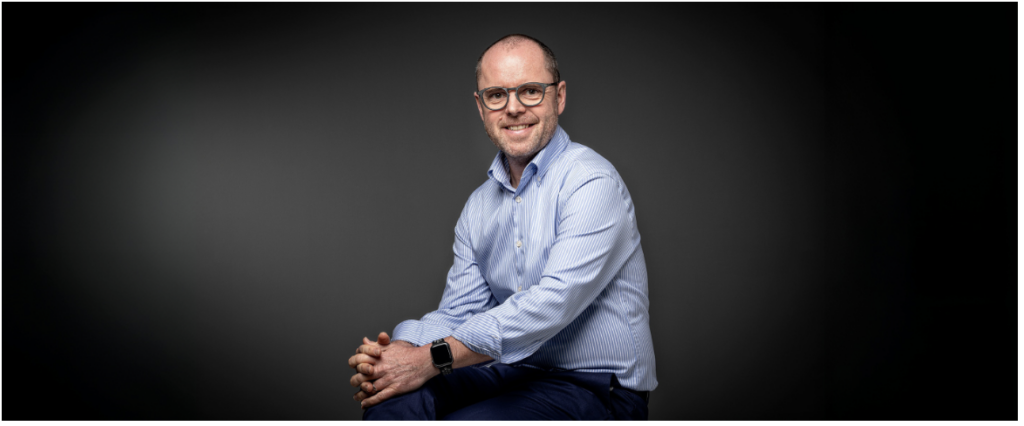

Neil Syder, managing director at Pilkington UK, shares how the company is leveraging to forge a more sustainable future for glass manufacturing – with a new rolled glass line at the heart of the transformation.
Sustainable innovation rarely arises in isolation, it’s typically nurtured by a strong sense of identity and informed by decades of technical experience. At Pilkington UK, our story of change is grounded in nearly 200 years of heritage and invention.
Our latest – the commissioning of a modern rolled glass line at Greengate Works in St Helens. This marks our most substantial UK production investment in recent memory, delivering a decisive shift in how texture glass is manufactured.
Glassmaking has been integral to the fabric of St Helens since the 19th century, and Pilkington has played a central role in shaping that legacy. Since 1852, we’ve produced patterned and textured glass that combines aesthetic appeal with function – today known as the Texture by Pilkington range. These 21 unique designs are grouped into three main styles, offering versatility across residential and commercial architecture.
Previously, this line was produced at our historic Watson Street Works – a site revered for being the birthplace of the float glass process. However, the years brought mounting operational challenges. Energy consumption, ageing machinery, and legacy infrastructure began to hinder our sustainability ambitions.
Recognising the need for change, we made the strategic move to relocate rolled glass production to our more modern Greengate site. Co-locating this with our float glass operations opened new possibilities for innovation, efficiency, and environmental impact reduction.
Engineering a seamless transition
Shifting operations from one facility to another might seem straightforward, but in reality, it was an intricate engineering challenge.
We had to divert molten glass from the float furnace into a separate building that houses the new rolled glass line. This required opening the side of an active furnace running at over 1,600°C, while ensuring uninterrupted, safe production. The project involved careful coordination, technical expertise, and teamwork across multiple disciplines.
Decarbonising texture glass
By consolidating operations under one furnace, we retired a parallel high-energy process, cutting annual CO₂e emissions by approximately 15,000 tonnes. That’s equivalent to removing over 8,800 petrol cars from UK roads every year.
The project was further supported by a £3.7 million contribution from the UK government’s Industrial Energy Transformation Fund (IETF), which helps heavy industries reduce their environmental footprint. The funding accelerated the project and underlined how public-private collaboration can fuel climate action.
We’re committed to reducing greenhouse gas emissions by 30% by 2030 (relative to 2018 levels) and reaching net zero by 2050. However, turning ambition into reality requires more than intent – it demands scalable, economically viable solutions.
The newly launched line ensures that our texture glass continues to be made in Britain, supported by a skilled local workforce. It also equips us to embrace future-ready processes and adapt to greener technologies over time.
The Greengate facility itself provides room to grow. Unlike the constraints of Watson Street, the new site features modern control systems, real-time data analytics, and the flexibility to pilot alternative fuels and materials aligned with NSG Group’s global sustainability roadmap.
Building a greener future
This initiative delivers far more than environmental gains, it’s also a model for regional economic resilience and industrial evolution.
We’re actively collaborating with local stakeholders to explore regeneration opportunities for the Watson Street site, and we’re investing in tomorrow’s talent through apprenticeship and training programmes. By combining low-carbon manufacturing with local development, we’re demonstrating that sustainability and prosperity can go hand in hand.
The transformation at Greengate is not only a technical achievement but also a strategic signal – showing how legacy industries can reinvent themselves without abandoning their roots. It’s proof that climate-conscious manufacturing is achievable today, not just aspirational for tomorrow.