
By Ed Williams, managing director, Stuga.
For many fabricators, machinery investment decisions are no longer being driven purely by output targets or headline automation levels.
Instead, the focus is shifting towards flexibility – the ability to adapt production, scale at the right pace, and invest in equipment that genuinely reflects how a factory operates today, whilst supporting how it is expected to evolve over the next few years.
Labour availability, space constraints and increasingly varied product demand mean that one-size-fits-all automation strategies are becoming less relevant. In response, more manufacturers are reassessing how individual machines, standalone processes and modular systems can work together to deliver consistent quality without unnecessary complexity.
Reassessing how automation fits the modern factory
This shift is particularly evident when it comes to corner cleaning and finishing. Accuracy, repeatability and surface quality remain critical, but the way these processes are integrated into production lines can vary significantly from one factory to the next.
Rather than defaulting to fully integrated systems, many manufacturers are now looking at how specific stages of production can be strengthened independently – improving output and quality without disrupting established workflows.
Where standalone machinery fits into the picture
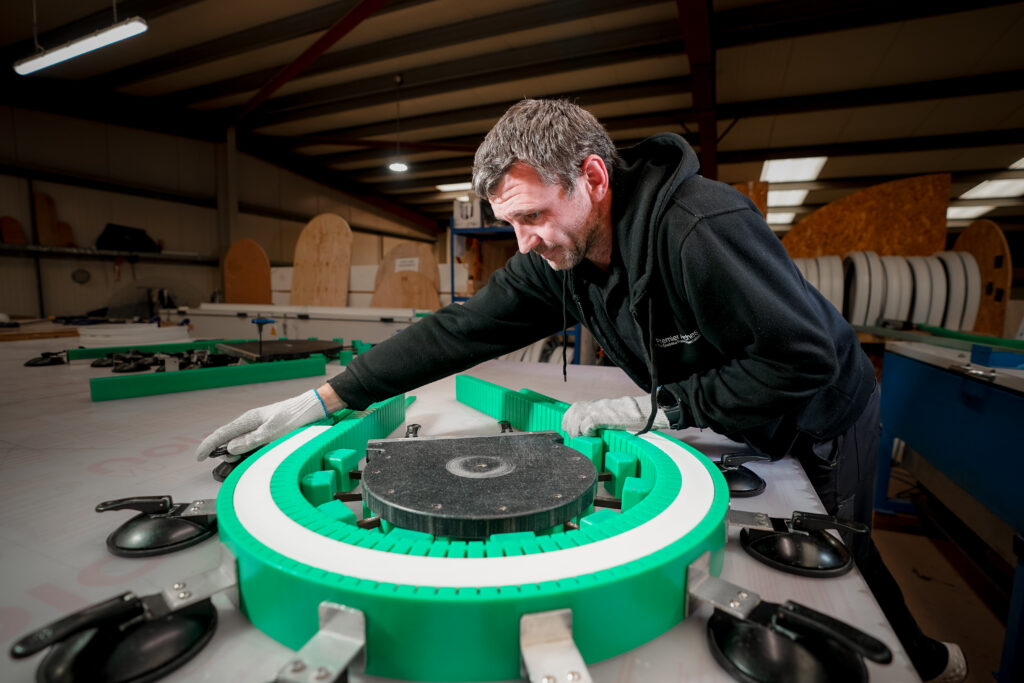
Standalone machines, such as the Stürtz 4AML-O corner cleaner, provide a clear example of this more considered approach. Built around state-of-the-art control technology, the 4AML-O supports a wide range of integrations within welding and cleaning lines, while also offering tools for internal machining using high-precision linear guide technology.
Its modular tooling concept allows it to operate as a standalone solution or integrate seamlessly into existing production environments.
For manufacturers seeking to improve consistency and finish without reconfiguring an entire production layout, this type of flexibility can be invaluable. Importantly, the growing interest in standalone machinery is not about stepping away from automation. In fact, it’s about choosing the right level of automation for each stage of a factory’s development.
The importance of product breadth
In practice, many fabricators operate with a mix of legacy machinery, newer systems and evolving workflows. The challenge is no longer about simply adding more automation, but ensuring that each investment complements what is already in place, while leaving room for future growth.
This is where access to a broader machinery portfolio becomes important. Rather than being limited to a narrow range of solutions, manufacturers benefit from working with partners who can offer everything from individual machines through to fully integrated, high-volume production lines – and advise on how those options fit together.
How broader access changes the conversation
Stuga’s position within the Voilàp Group has strengthened its ability to support this more strategic approach to machinery specification. With access to a wider range of solutions and deeper engineering resource, Stuga is now able to engage in earlier, more informed conversations around production planning, workflow design and long-term scalability.
Crucially, this does not mean pushing higher levels of automation by default. In many cases, the most effective solution involves addressing specific bottlenecks, improving quality at key stages, or upgrading individual processes before committing to larger system investments.
This modular way of thinking reflects a broader change in how manufacturers approach investment. Rather than committing to inflexible systems upfront, there is growing demand for solutions that deliver measurable improvements now, while remaining adaptable for the future.
A more consultative role for machinery suppliers
From Stuga’s perspective, this evolution has also reshaped the role of the machinery supplier. Today, customers are looking for more than equipment alone. They want guidance, transparency and confidence that machinery recommendations genuinely reflect how their factory operates.
By combining standalone capability, scalable systems and long-term engineering support, Stuga is positioned to help fabricators make informed decisions at every stage of growth. Whether that involves a single machine or a fully automated line, the focus remains the same: specifying equipment that works in practice, not just on paper.