

Deceuninck is giving fabricators greater visibility of deliveries through a new transport planning system. Backed by digital ordering, major stockholding, investment in manufacturing and one of the UK’s largest colour offers, it’s helping to bring more control to fabrication at a time when certainty counts.
Fabricators face multiple challenges. A difficult market, rising costs and pressure on their supply chains because of things far outside of their control.
Against that backdrop, running a fabrication business can according to Darren Woodcock, general manager, Deceuninck, feel a little like ‘being a passenger’.
He explains:
“The market is tough right now. We had expected things to pick up this spring and that hasn’t happened for reasons far beyond our control.
“There are a couple of things we need to recognise, however. The first is that the market is still there. There are some very strong areas of activity in new build, where housebuilders are cashing in and converting landbanks. That’s a very different story to the one we’re reading about housebuilders profit warnings.
“Social landlords and housing associations are also still developing sites because their spend is ring fenced, so new build is perhaps flatter than we expected but it’s not lifeless,” he continued.
“It’s the home improvement sector which is probably a little in the doldrums. Inflation has rocked consumer confidence.
“Even so, there is still a market if you have the right tools. For example, the energy efficiency sell against the backdrop of increasing pressure on household energy bills is the obvious one.
“If you can access the tools to do that, for example the Deceuninck Energy Calculator and can support end-users with a finance option, there are some big opportunities.
“But none of it right now is easy and we need to work to win business.
“That’s why we’re continuing to invest in our service and product offer to support our customers in doing that as effectively as possible.”
This analysis is underpinning Deceuninck’s service strategy, giving customers clearer information on when orders will arrive, while backing that up with stockholding, production planning and investment in UK manufacturing.
While it has offered digital ordering and real time digital stockholding for approaching a decade, it has extended the reach of its digital programme beyond the factory gates to include deliveries.
This supports better planning before product arrives at the factory as part of a wider shift towards more joined-up communication between order, warehouse, transport and customer.
“The point of delivery visibility is very simple,” Darren continues: “It gives customers time back. If you know when a delivery is coming in, you can plan your goods-in, your labour and your production schedule around it.
“If you don’t know, you’re reacting. And when you’re reacting, you’re losing efficiency.”
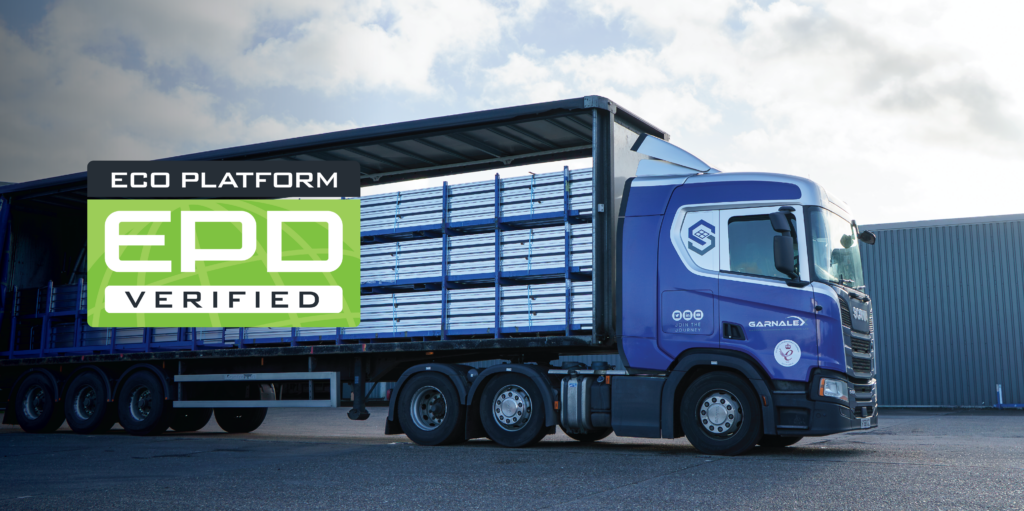
Deceuninck’s transport planning system gives customers improved visibility of scheduled deliveries, supporting better planning before product arrives at the factory. It is part of a wider shift towards more joined-up communication between order, warehouse, transport and customer.
This includes digital order tracking, with orders picked, scanned and loaded through Deceuninck’s warehouse and logistics process, reducing the risk of error and improving traceability.
Levering digital tools to give full transparency on orders to customers
The move builds on Deceuninck’s long-standing investment in digital systems. Through Deceuninck Online, customers already have 24/7 access to online ordering, order tracking, brochures, and specification guides.
“It’s a little bit like Amazon,” Darren explains. “The order comes in, it’s picked from the warehouse and an order for replacement stock goes into the production schedule.
“That visibility is incredibly important. It means we can see what is moving in real time, our customers can order when it suits them, and we can plan production around actual demand.”
This is underpinned by Deceuninck’s decision to hold stock rather than rely on a pure just-in-time model.
Its warehouse in Calne extends to 140,000ft2 and holds more than 4,000 products in stock, including profiles, trims and ancillaries. Orders are digitally picked and scanned on and off lorries, helping to maintain accuracy throughout the process.
“In a sense it’s a traditional model because we hold stock,” Darren says. “But what we’ve done is bring that model into a digital environment.
“We know what we have, what is moving, what needs replacing and where demand is going. That gives us and our customers a lot more control.
“Just-in-time works if everything lines up. But if anything slips in the supply chain, it’s the customer who feels it. We don’t want to operate like that. The customer comes first.”
98% or above OTIF on one of the UK’s widest colour offers
The result is an On-Time-In-Full performance which has consistently remained at 98% or above.
That performance is even more significant given the complexity of Deceuninck’s offer. The systems house has led the market on colour for more than a decade, supplying more than 30 colourways from stock, with a further 20 available in just 15 working days.
It has also recently expanded its premium foil offer with the addition of five new colours from Continental’s Conti mattex range: Beige Grey, Shine Beige, Shine Dark Graphite, Green Grey and Turner Malt Oak on white.
Available on a promotional 14-day lead time, with matching trickle vents and end caps, the new range gives fabricators access to ultra-matt finishes which closely resemble powder-coated aluminium.
“One in four UK windows and doors are colour and demand is still rising,” Darren continues. “Colour sells because homeowners want choice, but for fabricators the real advantage is being able to deliver that choice quickly.
“The new Conti mattex finishes give our customers something different. They sit in that softer, more premium colour space, with a finish that looks very close to aluminium. And because we can supply them quickly, it gives fabricators a commercial advantage.”
Deceuninck’s broader colour offer now includes more than 200 special foils and 350 different colourways, including single and dual colour options.
Investment in productivity and quality
Deceuninck’s industry-leading OTIF is founded on the investment it has made within its manufacturing capability and a continuous improvement programme to increase productivity.
This has recently included cutting average extrusion line set-up times by 14-minutes per set compared to 2025, reducing average set-up time to 75 minutes.
Line speed has also increased to 15.9, up 0.4 year-on-year, supported by the development of new motorised gasket inserters, which allow lines to run faster and more consistently.
Productivity, measured as metres produced against man hours, has increased by four points to 94, underlining a more efficient and streamlined manufacturing operation.
It also includes continuing investment in extrusion.
Deceuninck installed a new Exelliq Manufacturing 4.0 DIGI.LINE automated digital extrusion line at its Calne facility in 2024. The six-figure investment gives the UK operation one of Europe’s most advanced co-extrusion lines, increasing capacity while improving precision through real-time digital monitoring of material flow, water tanks, vacuum settings and cutting.
The investment follows a wider multi-million-pound programme, including two new extrusion lines and a Luna R automatic profile lamination machine.
“That investment matters because it gives us flexibility,” Darren says. “We are reducing set-up times, improving line speeds and improving consistency.
“It means we can respond more quickly to demand, but also manufacture to a higher level of accuracy. For fabricators, that means better product, less waste and fewer issues downstream.”